Thoughts on SAVE THE CAT! WRITES A YOUNG ADULT NOVEL

Hello, hello! How’s everyone doing this lovely, toasty day? I ended up with two books to review this month because this one decided to release a week early, so it’s impromptu book review time! It’s a craft book. I don’t know why I chose a craft book, but I did. Mostly because it’s been a while since I read one, I guess. Anyway, Save the Cat! Writes a Young Adult Novel by Jessica Brody was released on July 18th (Dad’s birthday! Happy belated birthday, old man!) from Ten Speed Press. As usual, I must thank them and NetGalley for access to an ARC in exchange for an honest and unbiased review. Let’s do the thing.
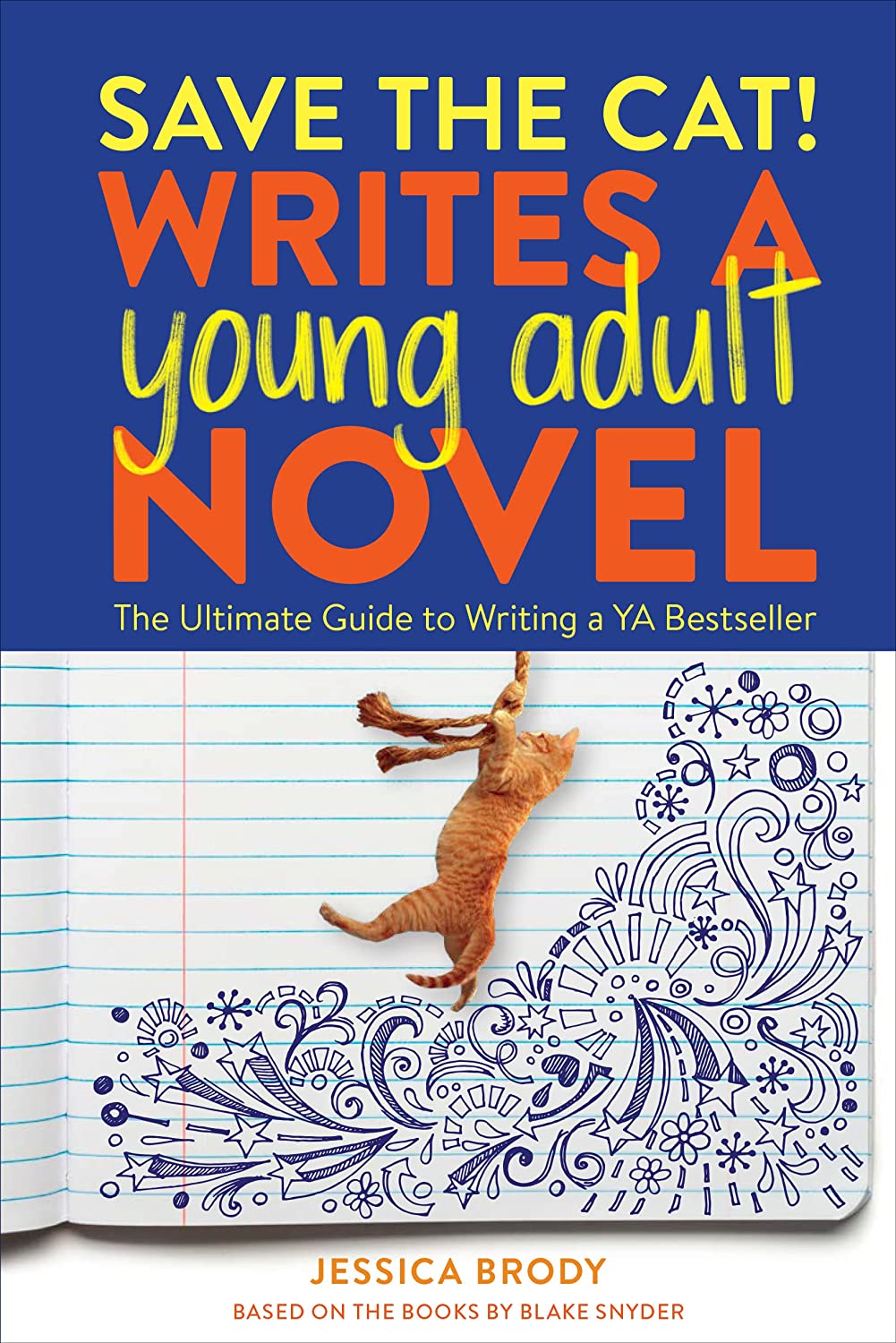
Save the Cat! Writes a Young Adult Novel expands on Blake Snyder’s screenwriting guide (Save the Cat!) and tweaks it to make it more easily applicable to YA novels. Along with the expected beat sheets, the author also includes guides to what she calls the ten Save the Cat! story genres. There’s also a chapter dedicated to writing a series and one about creating loglines and synopses when you’re preparing for publication/the agent hunt/whatever you decide to use them for.

The original Save the Cat! is pretty much the only craft book that I remember with fondness. Most I’m either meh about or hate with a passion. This particular craft book is better than most of the ones I’ve read, but I couldn’t get into it when the genres came up (and they’re most of the book). First, the good. I liked the beat sheet. It explains where events usually go and how plotlines merge and diverge and how to make your own beat sheet either before writing, during it, or between drafts. Plus, you can tweak it as needed if your story feels off. It’s a great tool. I also liked that the author discusses how to apply everything to a series and a synopsis. That was all actually very helpful.
My biggest problem with this book was the breakdown of genres. Instead of using traditional genres (fantasy, sci-fi, etc.), the author tries to categorize stories by their essence (rites of passage, buddy love, etc.). That’s cool. I like the idea. But there’s far too much overlap for these genres to be distinct from each other. How do I know? Because a lot of the same books are used as examples in multiple genres. It’s confusing. The author says that’s okay and that many people will disagree as to what books go into which genre, like it’s not a big deal. It’s fine for debates. But she also says each genre needs to include certain things. If my book crosses multiple genres, how do I know what to include? It’s confusing. Especially for newbie writers who might think a craft book is writing law and don’t realize they can break the rules. It’s just too messy for my liking.

The other problem I have with the book is definitely a me thing. I don’t like it when writers use their own work as examples in craft books. It just feels like they’re trying to get me to buy their stuff and they never delve as deeply into their own stuff, like they don’t want to give away spoilers. Meanwhile, they’ve just spoiled every other book they used as examples. This author does it sparingly until the chapter on series which is all about one of her series in the example. It’s annoying to me, but I know most readers don’t care.
As far as the writing goes, it’s a craft book. Starts out a little preachy, but that fades away pretty quickly. Otherwise, it’s long and very repetitive as most craft books are.

Ultimately, I found some useful things in Save the Cat! Writes a Young Adult Novel. It was one of the better craft books I’ve read. Apparently there’s also one about writing novels in general, so I might look that one up.

starstarstarstar outlinestar outline

Overall, I gave it 3 out of 5 stars. Craft books are either pretty good (4), meh(2), or bad (0) to me. This one leaned toward pretty good. If you’re writing a YA novel and you’re stuck, it’s worth having around.
Craft Books And Why We Need Them

Hello, hello!  A few days ago, I was bored and skimming through Facebook when I came across a friend’s post about how she had finally gotten back to writing after a pretty long break.  Being bored makes me nosy, so I read through the comments and noticed someone who is admittedly new to writing ask for some tips on how to improve her writing beyond practicing each day.  Let’s be honest, practicing every day is great, but if you don’t know the basics and how to push yourself beyond your limits, you’re not going to get very far.  How do you learn the basics of writing?  Surprise!  There are instruction manuals for basically everything, including writing.  We just happen to call them craft books.

b715df48edb773186527c2810fceb6e2

If you’re like me, you despise craft books because all of your English professors made you read the most boring literary ones they could find.  When you just want to write about demons and serial killers (or dragons and fairies for the fantasy crew/aliens and far away galaxies for the sci-fi crew/etc.), these books get old fast.  So, here’s my quick list of crafty type books for genre writers.

1. The Writer’s Journey: Mythic Structure for Writers by Christopher Vogler.  It’s based around Joseph Cambell’s Hero’s Journey (the basic structure of Western mythology and the different archetypes of the characters and all that).  My favorite part is that it’s aimed specifically at genre writing, so you won’t run across any random derogatory remarks about your chosen field like I have in other craft books.

2. Eats, Shoots & Leaves: The Zero Tolerance Approach to Punctuation by Lynne Truss.  I don’t care if you’re the smartest grammar Nazi in the world, we all need a little help with punctuation sometimes.  If you like dry British humor and concise explanations, this is the punctuation rulebook for you.  Yes, there are certainly more comprehensive and technical books out there, but unless you’re an English professor or an academic writer, I don’t really find them necessary.

3. Save the Cat: The Last Book on Screenwriting You’ll Ever Need by Blake Snyder.  Okay, so it’s not your traditional craft book, but it’s helpful with things like structure and dialogue.  Plus, it might just encourage you to try your hand at screenwriting.  It’s one of those books that explains a lot of the same things traditional craft books cover, but it comes at them from a different perspective.  So, if other books aren’t working for you, give this one a shot.

4. Danse Macabre by Stephen King.  This one is more of a history of horror than it is a craft book, but there’s a ton of useful information in here for horror writers.  I’ll also mention that On Writing by King is supposed to be a wonderful, more general craft book if you’re not looking for something specifically horror related.  I haven’t read the latter yet, but it’s on my to-be-read list.

5. Writing Fiction: A Guide to Narrative Craft by Janet Burroway.  I have no idea which edition I read (I believe it was the 8th), but I do know that she insinuates that genre fiction is common and lowbrow while lauding literary fiction.  Why would I suggest this book then?  Mostly because the writing exercises were worthwhile.  Plus the technical parts are short and to the point instead of super repetitive.  So, if you want a decent version of the undergrad go-tos, pick this one up, just be prepared for derogatory remarks toward genre fiction.

 I’m sure I forgot a lot of great craft books, and I’m definitely trying to forget a lot of bad ones, but I think this is enough to start with.  What about you?  Do you have any favorites that aren’t on this list?  Do you think they’re important to keep around even if you’re a seasoned writer?  I admit to selling most of my undergrad craft books, but I’ve kept all of the ones from Stonecoast (even the ones I hated), because there’s always something they can teach you.