Which Came First: The Story Or The Character?

Hello, hello!  One of the questions that authors often get asked is whether the story or the character came first.  It’s basically the writer’s version of the chicken or the egg causality dilemma, but there’s no satisfying scientific explanation for it.  There are actually a lot of different answers depending on who you ask, and in my experience, the answer is usually a little different for each story as well as each writer.  It’s part of what makes writing unpredictable and fun.  Even if I fall into a writing rhythm (which I like because it makes the words come easier), the path getting there is always a tad different.
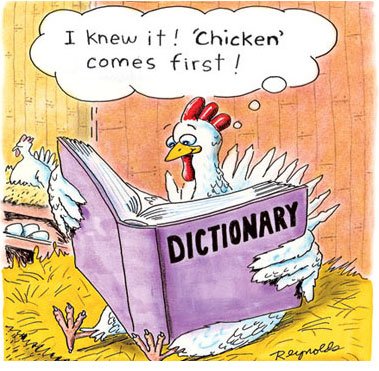
chicken-before-the-egg
I thought a writerly version was more appropriate than the other cartoons I found.

For me, I usually get a nagging voice in my head that turns into someone who wants to tell me their story.  The story is full of plotholes and vague connections and is nothing worthy of paper, but I can’t tell them that.  They also have a tendency to talk about other people like I should know who these people are (pretty sure we all know someone who talks like that).  Gradually, a cohesive story forms in my head and new voices pop up to fill in the holes.  If I haven’t started writing by this point, it goes into a list of ideas to work on after my current project is done.  That almost always quiets the voices enough that I can get my other work done.
MYT6q3IZiIlRS.gif
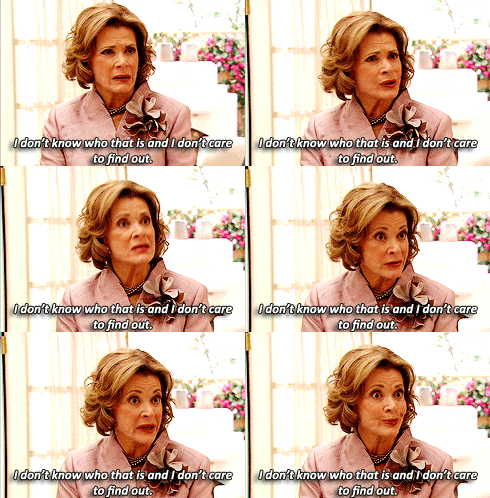
To everyone who assumes I know everyone you do.

I guess that means that my answer is that characters and stories have a tendency to come simultaneously to me.  Those are also usually the stories that are easiest for me to write down.  But I will say that I don’t need a fleshed out story to start as long as the voice in my head is strong enough.  I can’t work on a story when the characters aren’t there, so even though they might not technically come first, characters are the most important element to me.

Don’t get me wrong, though.  I do occasionally have a voice that pops into my head without a story to tell (they’re my favorites, but don’t tell the others).  These are the ones I talk to at night when I can’t sleep, so I learn so much more about them.  I tend to keep them around until I find a story to slip them into.  I also have a few plots and worlds that have built themselves with no solid characters to take the reins (but these are rare).  So, like I said, each story gets born a little differently for me.
tumblr_ncqfgjb0St1tp42tfo1_500
Just in case you were wondering about my sanity.

That’s how it usually works for me.  The story and character more often than not happen simultaneously, but not always.  What about you?  Do the voices in your head tell you their stories?  Maybe they just prefer to have random chats until you find homes for them.  Or perhaps the plot comes to you and demands you create people to act it out with.  Whatever your experience, feel free to share your thoughts or stories here or on my social media pages!

Form Rejections

Hello, hello!  Last Thursday, I sent out a few of the queries I was talking about in my last post.  Friday morning, I woke up to a form rejection from one of the companies that declare a no from one agent is a no from all of them.  They didn’t even take the time to personalize it with my name or the title of my “material,”  and the signature wasn’t from the agent I addressed my query to, but instead from an associate agent.  It had been sent at 8:04 in the morning.  I thought my first agent rejection would be devastating, that it would be so much harder to take than all of the other writerly rejections I’ve received.  I was wrong.  A form rejection that basic was pretty much the best first agent rejection I could have asked for.

rejected-kitty_orig
Cute animal memes help.

First, I suppose I should explain what a form rejection is for people who might not be sure.  It’s basically a vague letter turning you down.  Most of the ones I’ve gotten have an “it’s not you, it’s us” vibe.  They start with a firm no, usually followed up by explaining that your story doesn’t mesh with what they’re looking for, and ending with something along the lines of “feel free to submit to us in the future.”  Most of them are polite enough to include your name and the title of your story, at least in the realm of magazine/ezine rejections (not sure about agent rejections yet).

What do form rejections mean to me?  Honestly, they tend to be an indication that my story didn’t even make it out of the slush pile, that it probably didn’t even make it to human eyes (and I might be entirely wrong, but it’s what I like to think).  The places I submit to get hundreds of submissions a week.  There’s no way they can read each piece and give them the attention they deserve.  Slush readers weed through the ever-expanding piles and do their best to pick pieces the editors will enjoy or grab names that will bring in more readers.  I’m guessing a similar process occurs in the agencies.  I might not appreciate the whole process, but I understand it.  As writers, rejection is a part of the game and we can’t question each one we get.

elephant rejection
Okay, but only for a little while, then back to work.

So, yeah.  A barebones form rejection from an associate agent was exactly the kind of rejection I needed.  It doesn’t mean that Garnets and Guardians is unwanted trash.  It doesn’t reflect on my writing in any way.  It simply means the agency wasn’t hooked by my query, if they even read it at all.  And that’s okay.  I’m more worried about when the rejections get personal, because then I’ll know it’s my fault.  I might start getting really discouraged at that point.  Until then, I’ll just keep writing and submitting and collecting my rejections.  That’s all I can do.

49d9da07acf06ad615ae099ac4177a66
Don’t let the rejections get you down!

How do you feel about form rejections?  If they get you down, do you have any kind of ritual to help improve your mood again?  Feel free to share any thoughts, stories, questions, or whatever here or on my social media pages!

The Agent Search

Howdy, howdy!  How’s everyone’s spring (or autumn, depending on your hemisphere) going so far?  I’ve been wrapping up my winter by searching for agents and researching how to write queries and synopses.  In graduate school, they told us things like “make sure you have a finished, polished product (for fiction at least) before you query agents” and a few signs of questionable agents (ones who charge reading fees or want more than 15ish%, 20% at the most, etc.).  But nobody really explains how to find reputable agents or how to go about querying them.

5871545579642200752
When I first opened my browser to begin the research.

Google searches proved to be overwhelming at first.  They provided a plethora of information and no indication of where to begin, so I admit I panicked and sent a few emails out pleading for help.  That would be my first bit of advice: don’t be afraid to ask more experienced people for help.  Even if they can’t help you personally, chances are they know people who can.  While I waited for responses, I read through SFWA’s literary agents advice page, which is wonderful at telling you how to recognize questionable agents (it’s far more detailed than anything I learned in school).  I realize it’s a science fiction and fantasy group, but a lot of the advice here probably applies across the literary agent spectrum.  They also have pages about editors and publishers and other things that are super useful.

There are a number of publications (Writer’s Market comes to mind most readily) you can buy (some even come as Kindle books) or check out at the library that offer lists of current agents and agencies if you prefer more traditional research methods.  I didn’t want to spend money or visit the library this early in my searches, so I started at the Association of Authors’ Representatives website.  My only problem with this website is that it doesn’t group agents by agency, so it’s difficult to keep track of who works where which is really important since most agencies don’t want you to query more than one of their agents at a time (some agencies even say that a no from one of their agents is a no from all of them).  Then, someone sent me this post which groups science fiction and fantasy agents by agencies, and it gave me a solid starting point for my search (it was a life saver).  It’s a little old, though, so be sure to check out the agency websites and do your research as to who’s accepting what.

tumblr_mi1mkbm5OG1rqfhi2o1_250
There’s no magical way around the research.

That’s my second bit of advice: do your due diligence.  This is my baby that I’m about to shop around.  I’m going to make sure, to the best of my ability, that I’m not getting mixed up with someone who’s trying to take advantage of me and my work.  If you’re not sure how legit someone is, ask around.  Also, I’m making sure the agents are a good fit for me.  Don’t just randomly submit to people and hope it works out.  Go through their bios and websites to make sure they represent what you write and if they’re actually open to new clients.  And always check out the submission guidelines.  I look at it this way, if I’m wasting their time by submitting something they don’t represent or not following their guidelines, I’m wasting my time.

tumblr_o6cjf5iLad1tq4of6o1_500
Be wary!  We all have gut feelings.  Trust them if they say something is off.

Anyway, I’ve compiled a list of agents (I still have many more to look into).  I didn’t stop looking just because I found one who sounds like a perfect fit (she might not be interested in my story after all).  I will keep looking at different agents until I get ready to send out the first batch of queries (simultaneous submissions to different agencies are expected), then I’ll look for a new batch in case no one bites.  That’s all we can do.

Screen Vs. Paper

Hello, hello!  How is everyone’s March going?  Are we all ready for spring?  Personally, I’m definitely ready to sit outside and write or read.  The only problem with writing outside is that I use my computer (and its battery sucks), so I only get about two hours if I’m lucky before it has to be plugged back in.  Which brings me to today’s topic: screen vs. paper.  It’s a subjective topic.  Some people work better when typing and others feel more productive with a pen in their hand.  I’m kind of stuck in the middle on this one.

notebook-computer-writing-blogging
They both have benefits and drawbacks.

I tend to be a screen person.  Why?  Simply because it’s easier for me.  Whether I’m using my backscratcher to hit the keys or the on-screen keyboard, I can type much faster than I can write.  It’s not that I feel more productive (though technically I am) or creative when I’m on the computer, it’s just a matter of time management and the independence it gives me to work on whatever I want without having to worry about asking someone (namely Dad) for more paper or a different binder or whatever when I want to change projects.  For me, the computer makes life easier, so it’s what I use.

What most people don’t know is that I actually enjoy using a pen and paper.  I’ve always loved notebooks and journals and the like.  I used to have tons of them, but they mostly stayed empty.  It takes me twice as long as the slowest writer you know to even sign my name.  The paper has to be placed a certain way.  Sometimes, I have to write upside down.  I can’t move my arms much, so even something as simple as writing by hand becomes a big production.  But still, I like the feel of a pen in hand and my hand coming away covered in ink or graphite from rubbing across the page (left-handed people will understand).  Plus, I like being able to doodle in the margins when I’m stuck on something.

7
The struggle is real.

So, like I said, I’m stuck in the middle.  I love the idea of writing by hand, but it’s not a feasible every day thing for me, so I usually go with typing.  I can definitely see where some people might have trouble focusing on a computer (that Internet button is so damn alluring).  I can also understand why some people find paper to be impractical (there’s just no easy way to erase a sentence and add a paragraph in its place without making a seeming mess of the paper).  I guess I’m lucky that I can enjoy working both ways, even if I mainly stick to the screen.

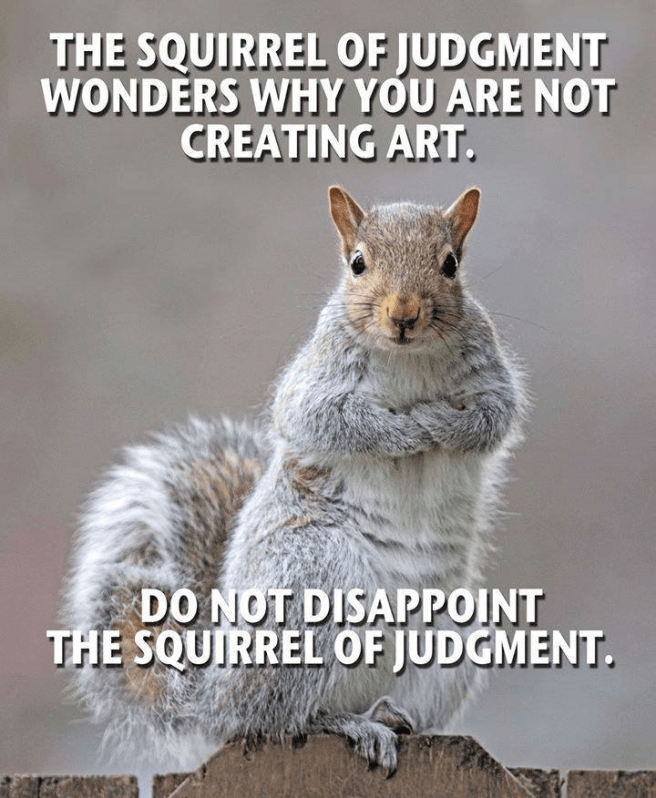
squirrel of judgment
The lure of the Interwebz has its downsides: judgmental squirrels.

I guess it’s all about finding what works for you.  Are you a screen or paper person?  This question isn’t limited to writers.  Even artists have the option of working on the computer or in more traditional mediums.  So, what do you prefer?  Or maybe you like using both in your process.  As always, feel free to share your thoughts here or on my social media sites!

Until next time!

Being Organized: Overrated Or No?


Howdy, howdy!  I was recently going through my manuscripts and free writes when I realized that I’m totally unorganized.  It’s all jammed into the same folder on my laptop, except for my main project (that gets its own folder with subfolders and the whole nine yards).  This is really unusual for me.  I don’t like having to scroll through a bunch of stuff to find what I want, let alone having to open multiple files to find the correct version.  That’s just not me.  Yet here I am, sifting through a mess.  It’s weird and uncomfortable, but for some reason, I kind of like it.

1516651974-funny-quote-about-organized-people
I really am.

Walking into my room, you might not think I’m as organized as I actually like to be.  My desk is a complete mess.  My CDs are no longer alphabetized by band, then chronologically by release date.  There’s no real rhyme or reason to my closets/drawers.  Why?  Because I can’t organize everything myself.  I know my Dad would sit down and organize everything if I asked him to, but I’m not going to waste his time with my quirks.  I know basically where everything is, so I’m not too worried about it.  My computer, however, has folders with subfolders arranged by whatever works.  I’ve gotten a little lax when it comes to organizing my pictures, I admit, but everything else has its own little place.  Usually.  My manuscripts turned out to be a mess I didn’t realize was piling up.

I was looking for a specific story, but I couldn’t remember what I called it and whether it was in its own document or bundled together in one of my free write documents.  I ended up going through three different folders (because apparently I wrote it as an undergrad and never moved it into the current manuscripts folder).  Normally, this would frustrate me to no end.  But I ended up finding a bunch of incomplete ideas that I had totally forgotten about.  Apparently, I have a lot more ideas for novels and short stories than I realized.  A lot of it was useless and stupid, but there were some gems hidden in the muck.

4533bccd-ac5f-4a0b-9398-a3667d4362f7
Weirdly true.

I can admit that it was fun taking the time to look through files I wouldn’t have otherwise given a second glance.  Being super organized means you’re occasionally going to overlook the small stuff.  Most of the time, I’m okay with that.  But I think I might just leave my manuscript folder a little messy.  That way, I’ll be able to take the time to look at those mystery documents once in a while.  But I’m definitely going to take a day or two to get my pictures back in order.  I’m not ready to let loose that much.

5PBD6Pj.gif
A messy folder is the equivalent of letting my hair down, but keeping it tightly braided.

So, I guess I’m trying to say that I can see the benefits of being a little disorganized.  I probably won’t ever be the type of person who’s comfortable not knowing where everything is, but I can deal with it.  What about you?  Are you super organized or do you like disorder?

The Between Space

Hello, hello!  I hope those of you who had a long weekend for President’s day got to do something fun.  My weekend was quiet.  Anyway, you know that space between being awake and being asleep, where you’re never sure if you’re dreaming or if something is really happening?  That’s what I want to talk about today.  It’s the place many of my story ideas come from.  It’s not an entirely pleasant place, but it’s useful.  Sometimes.  Often, it just likes to scare me silly.  I’m really curious about other people’s relationship with this space as well, so think about sharing your own experience with me.

teddy-bears-protecting-children
Either I’m not innocent or my stuffed animals are slacking.

First, I should probably mention that I’m not a visual thinker like a lot of people seem to be, I almost exclusively think in words.  People will ask me to picture something in my mind and I can’t.  The only time I can think in pictures is when I’m super tired and drifting in and out of sleep.  When that happens, I usually start out thinking in words and they gradually morph into a kind of dream/mental movie.  I guess that’s part of my attraction to this place.  It lets me work through things differently than I normally do.

I suppose the reason that I credit this space with a lot of my story ideas is because it’s a lot easier to remember details from these half awake dreams than it is when I wake up with an idea from a normal dream.  Those ideas tend to be vague scenarios that may or may not be interesting.  They’re good story seeds, but the ideas that bloom in that weird little realm between worlds are the ones most readily written.

7220b0ada6c7ce905ca4d8951b87118e
And that place certainly is dark enough.

Granted, my time spent in that realm more often than not leads to nothing other than a few scares (those stupid jolt awake moments) followed by my mind running through all the horrific scenarios of what could have possibly woken me.  It’s usually noises.  There’re the bumps and thumps of zombies trying to get inside.  Werewolves are not an uncommon expectation.  The train horn usually conjures thoughts of serial killers and creepy clowns jumping off the train and murdering their way through town.  Most people (at least according to TV and movies) wake up assuming the wind or something equally as mundane unless they hear something after the initial jolt.  Not me.  My mind automatically goes to death and destruction and knows the only reason I’m not hearing anything else is because the culprit is luring me into a false sense of security.  I might’ve watched and read too much weird stuff as a kid.

3d2667acd3c33445c8995048628977a2
These types of thoughts usually follow the paranoia.

So, whether I’m just hanging out in the middle of random thoughts waiting to be jolted awake or having a story bloom in my head, I have an odd love for that space between waking and sleeping.  I like seeing my thoughts unfold rather than just telling myself things.  What about you?  Do you enjoy hanging out in that little realm?  Does it let you see everything differently?  As always, feel free to comment here or on my social media pages!

Plotter Vs. Pantser

Hello, hello!  It’s been awhile since I’ve really written something writing related, so I thought I should probably get back to that.  After a long day of errands and asking people what I should blog about, a friend brought up the question of whether I’m a plotter or a pantser.  Basically, do I outline my stories or do I let them grow organically.  I’m sure I’ve at least glanced over this at some point in the past two years (I’ve kept a blog going for two years???  Who’d’ve thunk it?), but I decided to take a minute to dig deeper into this seeming dichotomy.

issue7
From So You WriteI still don’t know all the abbreviations, so don’t feel bad.

First, let’s take a look at plotters.  These are the people who get a story idea, then spend hours or days or weeks or longer plotting out all of the details and creating outlines and character bios and the like (and even charts or graphs for the hardcore plotters).  Some of them plan every little thing ahead of time.  Others write out the broad strokes (major plot points and characters and all of that) but leave connecting the dots until the actual writing process.  This works really well for some people, but it’s not the only way to write.

leqoiq575v_1437536694125
Just one example of plotting, courtesy of J.K. Rowling.

On the other hand, you have pantsers.  These are the people who get a story idea and just go with it.  Characters and adventures come and go organically as the story unfolds on the page.  Many of them have no notes beyond the story itself.  Some take notes as they go, so they don’t have to keep scrolling through their story to remember what someone was wearing or whatever.  Others plot things out in their head as they go, but allow the story to ultimately dictate what happens.  They aren’t afraid of getting sidetracked by a character who refuses to do what was planned.  In other words, they fly by the seat of their pants.

As different as these two things are, I think they’re more two ends of a spectrum than separate identities.  I certainly know people who are strict plotters and others who refuse to even attempt the restrictions of planning things out, but I prefer taking the middle ground.  I fully admit that I have more pantser tendencies than not.  I’ve always had trouble creating (and adhering to) outlines.  All of my stories start organically and I prefer to let them unfold on their own, but I do get stuck sometimes when I do it that way.  That’s when I switch to plotter mode.  I write a rant (I literally whine and complain and generally grump during this whole process) to myself figuring out where I want the story to go, then once I get back on track, I switch back to pantser mode.  There’s no shame in swinging both ways.

spockkirk_ed6bcd_4777877
How most pantsers feel when dealing with unruly characters.

There’s no one right way to be a writer.  Anyone who tells you otherwise is a Liar McLiarson, so don’t listen to them.  Don’t be afraid to try plotting if you’re a pantser.  It can really help things flow better when you’re stuck.  Also, try flying by the seat of your pants occasionally if you’re a plotter.  It can be freeing and new, exciting things could happen.

What are your thoughts on plotters vs. pantsers?  Which one are you?  Or do you dabble in both?  As always, leave a comment here or on my social media pages!
Until next week!

The New Year Is Coming

Hello, hello!  The new year is almost upon us.  Unlike a lot of people I know, I have to say that 2016 wasn’t a bad year for me.  Personally, it was a quiet and uneventful year.  Yeah, bad and scary things happened in the world, but good things also happened.  For example, Spinraza was approved by the FDA as the first therapy for Spinal Muscular Atrophy (which was one of my diagnoses over the years, but I was assured 7 or 8 years ago that I actually have Ullrich Congenital Muscular Dystrophy).  Also, a lot of people were lost this year, including icons like Alan Rickman, Gene Wilder, and Carrie Fisher.  But we’ve survived.  We’re still here to make 2017 a better year.  To make ourselves better people.

15726690_10154915430007848_1371003916072326513_n
R.I.P. General Organa

 If we want the new year to be better, we have to start with ourselves.  Many people make New Year’s Resolutions, which are great if you stick with them, but most of us don’t.  A week into January and that resolution to exercise more flies out the window with that first pulled muscle.  That resolution to be more positive disappears with the jerk who dents your car in the grocery store parking lot and doesn’t bother leaving a note.  It’s hard to change our habits.  And that’s okay.  But if you really want the year to be better, you’re going to have to make an effort.  That’s why I’m making a goal for myself for 2017.

3c7
That’s how it goes.

 For 2017, instead of trying to change my habits (which is what resolutions usually entail), I’ve decided to pick one area of my life that I want to advance in and create a high (but reachable) goal for myself.  Right now, I’m mostly concerned about my career, so my goal is to find an agent by the end of 2017.  Hopefully, it won’t take an entire year, but it’s a goal I’m comfortable with.  If I were feeling courageous, I might go so far as to make my goal having my first novel published, but that takes time and requires an agent first (okay, so I don’t technically have to have an agent and I could go the whole self-publishing route for those who want to argue those points, but I don’t feel comfortable with those options for myself, so an agent I shall search for).

So, that’s my one big goal for 2017: find an agent.

I simply feel that if we aim to improve one part of our lives at a time (whether it’s our career, personal relationships, health, or whatever) with a concrete and reachable goal, we’ll have a better chance of achieving it and thus improving our year.  By all means, make some resolutions or extravagant goals.  Aim to change the world if that’s what you’re into, but remember that change starts at home.  By improving yourself, you’re improving the world.  Don’t let anyone tell you different.

quote-if-you-want-to-change-the-world-first-try-to-improve-and-bring-about-change-within-yourself-dalai-lama-106-25-22
Exactly.

 Do you have any resolutions or goals for the coming year?  What area of your life would you most like to advance in during 2017?  Leave a comment here or on my social media pages to share your plans for the year.

See you next year!

A Writer’s Tale

Hello, hello!  I was at a loss over what to write for today.  My usual plea for topic ideas proved unfruitful this time.  Then, I realized that I have never shared my journey to writerhood on here.  At least I don’t think I have.  Feel free to stop reading if you’ve heard this story before.

I’ve always written.  Stories, poems, the occasional attempt at a comic strip (but my drawing skills failed me there).  I never really wanted to be a professional, though, so I’m a little different from my friends and fellow writers who have wanted to do this forever.  My crazy job goal was always a fashion designer, but when I figured out that wasn’t going to happen, I set my sights on more obtainable professions.

southern-methodist-university-beautiful-college-universities
Dallas Hall at SMU.  This campus is where my plan tumbled down.

 I went through most of my time at college (both community and university) waffling between psychology and English.  With psychology, I could help kids like myself.  After all, all the psychologists I saw walked into the room and presumed to know how I felt.  It never seemed right to me.  At least I would appear a little more relatable than they did to me.  I also kept returning to English because it was easy and I enjoyed it.  In fact, by the time I transferred to SMU (I went in as a Junior), the only degrees I had time to finish were psychology and English.

Since I had a semblance of a plan with psychology, I initially decided to go with that major.  It was going well.  I passed all my classes with fairly high grades (never less than a B).  I really got into abnormal psychology, especially the class that focused on disorders in children.  I aced my research class paper.  But I still kept taking English classes as well.

2c5377c130a4205d2afe15b420112a517aafe30bee6ac6c260d13f0888601e6b
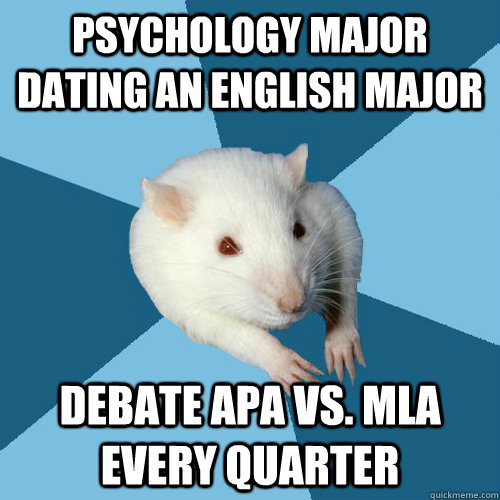
Try having the debate with yourself.  I still secretly prefer APA.

 Then, that fateful day came.  Dad was walking me to class after a stop at the campus coffee shop and we were talking about majors and what I was planning to do, when he asked the question that shattered my little plan.  “How’re you supposed to be a psychologist when you don’t like people?”  He was right.  I’m not a people person.  I don’t like to pry.  I’ll offer advice when asked, but beyond that you’re on your own.  What kind of psychologist would I be?  I could go into research, but I don’t even like that.  Thus, I became an English major.

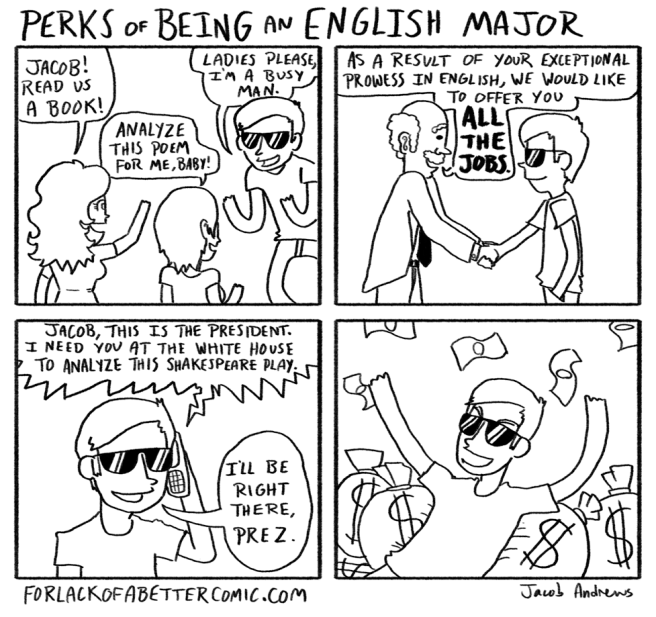
35
Don’t fall for the hype!

 What was I supposed to do with an English major?  I had zero desire to teach.  So, I took some creative writing courses, found out that I still enjoyed writing, and dipped my toe into the big bad world of writerhood.  And that’s how I found myself on a path that would take me to Stonecoast and onto a place where I could live with the voices inside my head without having to worry about people.

How did you decide to pursue the path you’re on?  Did you always know you wanted to do it or did it spring itself on you?  Tell me your story in the comments or on my social media pages!

Brace Yourself: NaNoWriMo Is Coming

Hello, hello!  It’s already nearing mid-October, which means November is right around the corner.  We all know what that means, right?  And no, I’m not talking about the election.  It means that NaNoWriMo is almost upon us.  For those of you who don’t know what that is, it’s National Novel Writing Month.  Every November, a bunch of writers (new and old alike) try to write a short novel (defined by the website as 50,000 words) or a good chunk of a larger novel in order to win prizes and bragging rights.

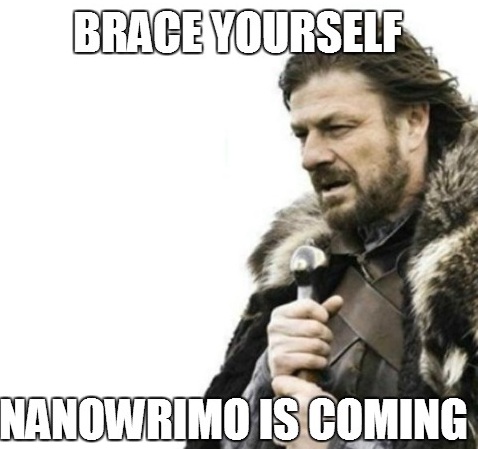
nanowrimo-is-coming
It’s like that.

 It’s a pretty interesting concept and their definition of “novel” is incredibly loose.  On the website, it says “We define a novel as ‘a lengthy work of fiction.’ Beyond that, we let you decide whether what you’re writing falls under the heading of ‘novel.’ In short: If you believe you’re writing a novel, we believe you’re writing a novel, too.”  It pretty much just requires you to write 50,000 words on one project in 30 days.  That’s roughly 1,667 words a day.  The goal is basically quantity over quality with the belief that it’s more important to get the words on the page, then you can revise and edit everything later to polish it up.  And the forum provides a nice community area full of helpful tips and plenty of others who are also procrastinating (why else would you be in the forums?).

I know many people who participate (many of whom often win), but I don’t.  I’ve tried in the past and failed miserably.  Up until recently, I couldn’t even fathom writing that many words in one day.  Even though I’ve done it before, I doubt I could do it more than two days in a row, let alone 30 days.  I don’t believe in writing every single day anyway.  It becomes a slog if I do that.  So, maybe I’ll try NaNoWriMo again in the future, but for now, I will remain a bystander cheering on those who do participate.

ohi0153-nano-2008nov03
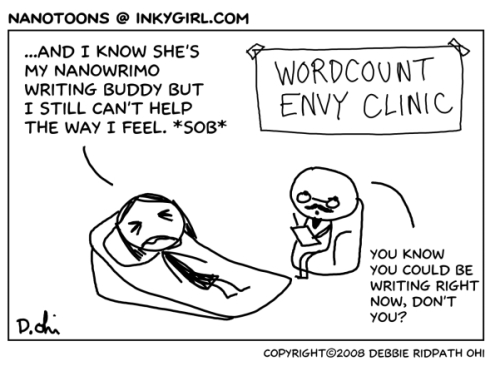
Part of the bystander’s job? Remind them to write.

 Why must we brace ourselves even if we aren’t participating?  Because, our friends who are doing it will be posting about larger than average word counts (I know some people are sensitive about this and that’s okay), they’ll bounce back and forth between love and hate for the new novel more often than usual, and they will generally be in a writerly panic throughout the month of November.  As bystanders, it’s our job to provide love and support and understanding during this process.  It’s also our job to gently remind them to keep on schedule or catch up when they miss a day.  We never tell them to quit.  If they don’t reach 50,000, we don’t recognize that as a failure, we celebrate the words they did write.  This is how we help.  We also remind them to eat and sleep and shower if need be.  The bystander’s job is an important one.

aydredv_700b
This works for writers too, just make sure to include a computer or something for writing.

 Are you participating in NaNoWriMo or are you going to be a bystander?  Any words of advice for newbies on both sides?  If you need support and encouragement throughout the month (or want to talk about why your writer seems crazier than usual), don’t hesitate to get in touch.

Until next week!