It Just Irks Me

Hello, hello!  The past few weeks, I’ve been really diligent about submitting to at least two magazines or anthologies each Monday.  This means that I’ve been going through Duotrope, Ralan’s site, and random calls for submissions.  In my searches, I came across a really neat anthology that I will likely submit to if I can come up with a story that falls in the realm of Sci-Fi, but something about their call rubs me the wrong way.  They’re looking for people who “identify as disabled.”  I had to read their call three times before I realized it was that exact phrase that made me twitch every time.  Something about it just irks me.
head tilt
If I could tilt my head, this would’ve been my reaction.

The anthology is being put together by people with disabilities and will be comprised of stories/essays/poems/etc. by people with disabilities, so I want to be clear that I think it’s a wonderful thing and I look forward to reading it.  The thing that makes me pause and overthink everything is the concept of choosing whether or not to identify as disabled.  It’s something I never really thought about before, because my crippleness is so apparent that not having it as part of my identity was never an option.  In my experience, people are either disabled or they aren’t.  They don’t really get a choice.

Sure, some disabilities are less severe than others.  Some are even invisible.  But a disability is a disability regardless of whether outsiders can tell it’s there or not.  If you’re disabled in a way that isn’t apparent to others and you choose to keep it to yourself, that’s your prerogative, but it doesn’t change the fact that you’re disabled.  If you don’t have a physical or mental deficit/difference, even if you want one (which apparently is a thing, though I have no idea why anyone would want to be disabled), then you aren’t disabled.  You could become disabled in the future, but you aren’t right now.  Disabilities don’t care how you identify.  They either happen to you or they don’t.
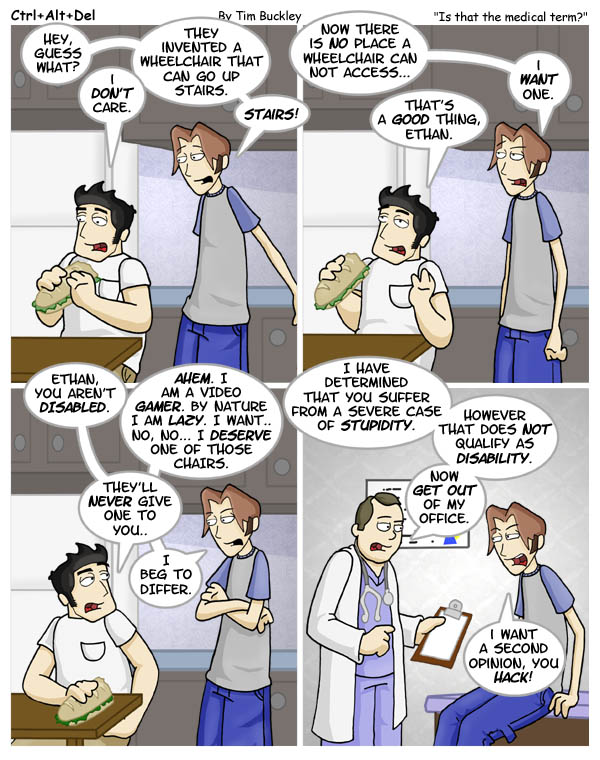
ctrl-alt-del1
From Ctrl+Alt+Del.  I still laugh when I come across this one.

I suppose my biggest issue with the idea of choosing whether or not to identify as disabled is that it implies disability is some kind of social construct that people can opt into or out of whenever they want.  It’s not.  Disabilities are diseases and abnormalities that people have to deal with every single day.  It’s not a choice.  It’s not politics.  It’s the hand life decided to deal us.

But I also know there are a lot of people who struggle with the idea of whether or not they’re “disabled enough” to claim the title.  That’s why the anthology uses the concept of identity in its call.  They want to include as many people as possible and they want people with disabilities to know that they aren’t judging what counts as a disability.  They want people to feel welcome to submit no matter the type of disability or severity.  In my head, I know and understand this.  I even think it’s a diplomatic way to handle a tough situation.  It’s just something that made me stop and think.

what-is-overthinking-disorder-1
I do this far too often.

I’m going to stop rambling now.  Feel free to leave your thoughts or comments here or on my social media pages!
Short Stories, Novellas, Or Novels?

Hello, hello!  Last week, I asked a friend to suggest a topic for my next blog post (I’m running low on ideas, so feel free to suggest some topics or ask me questions) and she brought up short stories vs. novellas vs. novels.  She wanted to know my preferences based on being a reader vs. being a writer.  So, I thought I would use today to talk about the lengths of the things I enjoy reading as well as of the things I enjoy writing.  It seemed like a good topic since I haven’t written many writerly ramblings lately.

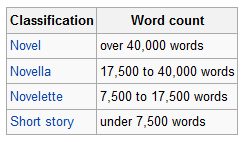
wordcount
These are the general guidelines.

First, I suppose I’ll approach the topic as a reader.  If I’m looking for something quick to distract me for a short period of time, I love digging into a short story.  But, most of the time, I prefer to read novels.  I like being able to get lost in a new world and getting to know the characters in a way that shorter works don’t allow for.  As far as novellas go, I don’t actively search them out, but I don’t dislike them for any particular reason.  One of my favorite stories is “The Body” by Stephen King, which is a novella in his collection Different Seasons.  Overall, I suppose I’d rank my reading preferences as novels, followed closely by short stories, then the occasional novella.

As a writer, things are a little more complicated.  Let’s look at novels.  I’m still fairly new to this particular form and I’m not entirely comfortable in it.  Though, I will admit, as I work on each new novel, I’m becoming more and more drawn to it.  At first, it felt like I was rambling.  I couldn’t get a grasp on the idea of the slow reveal and how to keep it interesting while my characters were going about their days.  I’m two-thirds of the way through writing my third novel and I’m finally feeling like I might semi know what I’m doing.  So, writing novels is growing on me.

216247_10151632534930520_1496248641_n
Me when I look over my novels.

Short stories, on the other hand, are where I feel most at ease.  I enjoy the conciseness of the short form.  It’s easier to keep track of one or two plots and characters than it is to keep track of a novel full of them.  I’m not constantly stressing because I just know I forgot some minor detail that will inevitably turn into something major.  Don’t get me wrong, I forget stuff in my short stories all the time, but it’s much easier to catch those things when it happens in 20 pages vs. 300 pages.  It’s also much easier to keep the writing motivation going for a week or two instead of three or more months.  Plus, I have a lot of fun with short stories.  That’s why they will always be my favorite to write.

1892-451x600
Well, that was a short story.

Then, there are novellas.  I honestly haven’t ventured into this realm yet.  I stopped working on one of my fetish fairy tales because it was leaving the territory of a short story and becoming a novelette/novella.  I thought maybe it had too much backstory and I needed to cut stuff out.  But recently, I decided to just let it go where it’s going and figure out what to do with it later.  I have at least one other story that needs to be expanded into a novella, so I might try my hand at it one day, but today is not that day.

In the end, I suppose my writing preferences would be ranked short stories, novels, and novellas in a distant third.  What about you?  Do you have a preference when reading vs. when writing?  Is there an equivalent option in your craft if you’re not a writer?  Share your thoughts and comments here or on my social media pages!
Looking Forward: 2018 Goals

Howdy, howdy!  A couple of months ago, a friend asked me if I would be interested in creating some writing goals for the new year and sharing them with each other for accountability purposes.  I agreed, because accountability is the best way to motivate me.  So, since we’re (not so) slowly making our way through December, I thought I would go ahead and share them with everyone.  As I’ve probably said before, I don’t care for the idea of making resolutions, because they’re usually vague things (eating healthier, exercising more, going out more, spending less, etc.) that people keep up with for a few days or even weeks then forget.  Goals, on the other hand, tend to be more specific, thus easier to keep track of and definitively complete.  So, here are my writerly goals for 2018.

a97b5a57e4783f1a81aafdab7e4498e2
Pretty much.

1. Finish the first draft of DS1 (code name for my novel-in-progress).  I probably should’ve finished this by the end of December, but I hit a road block and decided to work on my fetish fairy tales for a little while.  I’ll finish the fairy tale I’m working on this week, then get back into DS1.  I should finish that by the end of January/middle of February.

2. Revise LR1 (code name for the shitty first draft of the last novel I wrote).  I’m actually really interested in getting back to this one.  No idea if it’s still as awesome as it felt while I was writing it (first drafts never are), but I’m looking forward to tearing it apart and making it better.  Hopefully revisions won’t take me more than two months, but we’ll see.  I’m not the best at revising things.

front
It’s not wrong.  Though, I’m still using .doc instead of .docx.

3. Revise DS1.  Despite getting a little stuck on this one, I still absolutely love the idea and the characters.  I hope I feel the same way after I finish it.  My biggest problem is that I know the ending, I just don’t know how to elegantly connect it to what I have thus far.  I guess I’ll smash it all together and smooth things out during the revision process!

4. Query 100 agents for LR1 or DS1 depending on which is better.  I’ve decided to put G&G away for a while and focus on the other two novels.  Hopefully one of them will have more appeal for agents.  I can always go back to G&G later, but after 100 rejections, Bailey definitely deserves a nice little break.

5. Write 10 short stories/flash pieces OR 1 new novel.  I really want to use 2018 as the year of revision.  But at the same time, I also want to keep producing new work.  I’m leaning more towards the short stories/flash fiction option because I could take a couple of days off of revision each month to work on something fresh, but like I mentioned above, I don’t really know how long revision will take me.  If it doesn’t take too long, I wouldn’t mind working on another novel.

6. Submit short stories/flash pieces (2+ subs a week).  I admit that I’ve been neglecting my short story submissions this year.  I want to change that in 2018.  Maybe I’ll eventually snag someone’s attention!

542c38f804ca62fd98385151e1b647fb8fe02a81acf76a6a07712df4563d6359.jpg
Maybe.  I doubt it.  Reassurance, please!

And those are my writing goals for 2018.  Do you have any goals for next year yet?  Feel free to share them here or on my social media pages!

Character Questionnaires: Yes Or No?

Howdy, howdy!  While I was searching for something writerly to blog about, I kept coming across ideas for character questionnaires (getting to know your characters, things to know about your character before you start writing, etc.).  The questions varied from basic stuff about looks and personality to weird things like “what’s in their fridge right now?” (the main character of my novel-in-progress currently has pizza, coffee creamer, and pouches of blood in her mini fridge, in case you were wondering).  And, at first, this seemed like a really neat idea, until I came across a list of 1,000 questions I was supposed to know answers to for my characters.  Yes, three zeroes.  It seemed pretty excessive to me.  I started to wonder when something like that went from a useful tool to being something to procrastinate with.

QQ
Pretty sure this would be the reaction from my novel-in-progress’ main character and her bestie.

I just feel like there are things you should naturally know about your characters before you start writing, even without a questionnaire.  Name/nickname, the basics of how they look, main personality type, any distinguishing features.  For me, these are all things that come naturally with the voices in my head.  I don’t need to write them down, because I know them.  Occasionally, I’ll make a conscious decision to change an eye color or hair color if I have too many blue eyed blondes or whatever, in which case writing it down somewhere is helpful.  But all the questionnaires that start off with these things feel more like a way to procrastinate than anything useful.  On the other hand, if you’re the type of writer who works on multiple projects at once, I can see how you might mix up characters without having some kind of reference sheet.

Then, there’s the group of questions about character motivations which seems a lot more helpful to me.  Knowing why your characters do things helps when you’re writing and trying to decide how they’ll react to different scenarios.  It makes writing believable scenes easier.  Say your main character freaks out when their roommate pulls out a sword in a non-threatening manner.  Why?  Well, if you know they witnessed their sibling getting stabbed, you can hint at that or build around it even if the reader doesn’t know it yet.  Something less severe: why does your main character throw a tantrum every time her boyfriend steals her Oreos even though she’s a grown woman?  Maybe her siblings always ate all the cookies when she was a kid.  If you know their motivation, you can figure out how they’ll handle things realistically.

4hnrl
A completely acceptable reaction.

Last, they have the really out there questions.  The “what’s in the fridge” and “favorite sex positions” types of things.  These are the ones that I’m almost positive people answer to feel productive, but they’re really just procrastinating.  I don’t think my character’s preference for red Gatorade over blue has any impact on my story, unless there are monsters in the Gatorade, then maybe.  These are the questions that are fun if you’re having trouble writing one day and are hoping answering them will spark something.  Otherwise, you’re just goofing off.  And that’s okay!  I understand the desire to put things off, but don’t lie to yourself about it.

i-dont-procrastinate-i-just-do-things-later.gif
It’s totally procrastination.  Own it.

Overall, I don’t find character questionnaires that helpful.  They’re fun and something to do if I’m stuck or really don’t feel like writing, but, honestly, I’d rather just write most of the time.  What about you?  Do you fill out character questionnaires wen you create your characters?  What are some questions you find the most useful?  Which ones do you ignore or consider unhelpful?  Feel free to comment here or on my social media pages!

Three Golden Rules For Writing That I Never Follow

Howdy, howdy!  I recently talked to a friend from my critique group about some comments I sent her on a story, and she mentioned the notion of writing rules.  These are the things that get constantly reiterated in writing programs (like our MFA program).  We’re told all of the things we can and can’t do.  Meanwhile, authors who are getting published are breaking all the rules and no one else seems to care.  Does that mean the rules are really suggestions?  No, not necessarily.  It simply means people are choosing to break the rules that don’t work for them or their stories.  Some of them do this more successfully than others, in my opinion.  But I’m glad I learned the rules because breaking them deliberately tends to work better than breaking them because you don’t know any better.

Rules
Sure they are.

But here are three of the rules of writerhood that I never follow:

1. Write EVERY day, even on holidays and when you’re sick.  Because everyone knows you’re not really a writer unless you write a bunch of words every single day and never take a break.  Except, that’s complete bullshit and anyone who tells you otherwise is a Liar McLiarson.  Yes, it’s good in the beginning and helps train your brain to take writing seriously, but beyond that, it’s just not possible and you shouldn’t feel obligated to work that way if it doesn’t help you.  Personally, I need a weekend, even though I mostly just sit around and play mindless games.  Self care is important and you deserve it.  Plus, who wants to write after they’ve been up all night projectile vomiting (just an example)?  It’s okay to take breaks.

2. ALWAYS read your work aloud.  This is great advice if you’re practicing for a reading or if something doesn’t feel right and you can’t figure out what it is, but I don’t like reading things out loud.  For one, I feel stupid doing it.  But mostly, I don’t want to read my novels out loud because I’m lazy.  It would take forever at the pace I speak.  Plus, the voices in my head make reading silently more interesting for me and I can hear when things sound abnormal in their voices, whereas if I’m reading aloud, I might find out where I stumble over phrasing, but I’ll miss things that feel natural to me even though my character wouldn’t actually say it.  So, reading everything out loud isn’t for me.

quote-the-road-to-hell-is-paved-with-adverbs-stephen-king-57-42-06
Stephen King said it, so it must be true!

3. Adverbs are BAD.  This is one of those rules that I ignore when I’m writing, but follow when I’m revising.  Yes, there’s usually a better way to say things than using adverbs, but I’ll be damned if they aren’t awesome in a first draft (which is the writing part of writing for me).  It’s difficult to think of the perfect phrasing when your goal is to get words down on a page.  That’s where adverbs come in handy.  Sure, there are better, more evocative ways of saying “she walked slowly upstairs,” but it’s a perfectly acceptable phrase for a first draft.  You can decide in your edits whether she trudged, or hobbled, or snuck (sneaked?), or whatever.  But adverbs are great placeholders until that point.

some-of-the-wkyu2z
Such a rebel.

So yeah, those are a few of the golden rules of writerhood that I break.  What about you?  Are there any rules of your craft that you don’t follow?  Anything that seems like it was created by an overzealous person who didn’t understand that not everyone works the way they do?  Feel free to share your thoughts, comments, etc. here or on my social media pages!

How Short Is Too Short?

Howdy, howdy!  I’ve noticed a strange trend in the world of short stories lately: they keep getting shorter.  It kind of reminds me of cellphones.  They started out as these huge, bulky things that people wanted smaller and smaller, then all of a sudden people wanted them bigger again.  Is that what’s going to happen with short stories?  I don’t know.  But I do know that short stories are getting smaller and smaller at the moment.  When I first noticed it, there was flash fiction (1,000 words or less), then micro fiction (100 – 500 words depending on who you ask) popped up, and now I’m seeing a lot of talk about 50 word stories.  It’s not that I mind this trend, I’m just curious about what it means for the writing world in general.

mobile-phones-evolution-6
I suppose we’ve reached the early 2000s by comparison.

Personally, I enjoy writing and reading flash fiction.  It’s a challenge to write a story that feels complete and satisfying in under 1,000 words, but it’s possible.  Micro fiction, on the other hand, I tend to look at more as poetry or as excerpts.  It’s rare for me to find one that works as an actual story in my mind.  And I have a feeling I’ll be looking at these 50 word stories the same way.

Don’t get me wrong, I’ve written things that were super short as an exercise in conciseness, but I never considered them to be worth submitting anywhere.  I never realized it was something people were interested in to be honest.  And why are people so interested in them?  Is it because of the time we live in?  In the day and age of Tweets and instant gratification, do we just not have the attention span to read something longer?  The cynical part of me believes that has a lot to do with it.  Another part of me thinks it started out the way I started doing it, as a personal challenge, that someone decided to share with other people who took the challenge upon themselves.  Whatever the reason, it’s apparently a thing now.

it-s-a-writer-thing-unisex-tri-blend-t-shirt-by-american-apparel
It’s okay.  I’m a writer and I don’t entirely understand.

I’m all for conciseness, but how short is too short?  Are there going to be 10 word stories next?  Serious questions, I’m not being facetious.  I was always told that a story should have a beginning, middle, and end.  That was the golden rule when I started writing.  But nowadays, some stories start in the middle and only hint at a beginning or even start at the end and that’s all okay.  I don’t mind things breaking the rules if it works.  I’m curious though, when a reader has to build a story in their head around the 50 or 100 or however many words they get, can the author still really take credit for the story?  Yeah, the words planted the idea, but the reader had to do most of the work.  Maybe that’s the whole purpose of stories that short, to make the readers work for it.

overthinking
I know I’m overthinking it.  It’s what I do.

I don’t have the answers, but these are the kind of things I think about.  What about you?  What are your thoughts on 50 word stories and this trend of short stories becoming shorter in general?  Feel free to post your thoughts and comments here or on my social media pages!
Five Things I Couldn’t Live Without As A Writer

Howdy, howdy!  Lately, I’ve gotten back into a pretty steady writing and reading rhythm with this new book.  My current novel-in-progress is something I’m still excited about, even after the “new” has worn off.  I’ve also found a book that I’m enjoying reading, so that helps a lot.  But even though my writing rhythm has changed during this new process, there are still a few things that I couldn’t do without during my writerly time, things that have stuck with me through all of my writing processes.  I thought I would take a minute to share them with you.

typing.gif

1.  Writing stints.  Most writers call them sprints, but that implies a race and I’m not comfortable with that since I type fairly slow.  Anyway, these are when I get together with a friend or two, we set word count goals for ourselves, then write for an hour, check in with each other, and start all over again for a second hour.  It’s not a regular thing anymore, but it really helps on those days when writing is hard.  And we don’t have to do it at the same time (though it’s more fun when we do), as long as we check in at some point.

2.  Eye candy or regular candy, I’m not picky.  Writing is surprisingly draining, so it’s important to refuel and relax occasionally.  For me, that includes music videos with my favorite pretty males.  Chocolate also helps.  And yes, I totally use the post-writing haze as a rationalization to objectify people (males and females alike) and indulge in sweets.

cthulhuabsinthe__40844_1353981445_300_320

3.  Specific t-shirts.  I swear I’m not one of those people who have a writing outfit or something like that, but I do have a few shirts that seem to improve my writing mood.  I mean, who wouldn’t want to write when they have Cthulhu on their chest?  I tend to be more productive when I’m wearing either of my Cthulhu shirts.  My Little Mermaid shirt is also showing promise given how much I achieved the last time I wore it.  Some shirts just seem more energizing than others.  Don’t judge me until you try it.

4.  Mirrors.  This is probably just a weird quirk of mine, but I have trouble focusing when I can’t see what’s going on around me.  The easiest way for me to do that is with mirrors.  If I hear a funny noise behind me, I only have to glance to either side to see what it is.  It cuts down on excuses for me to turn away from my computer when I’m working, which helps when I’m looking for a reason to avoid writing.

introvert

5.  A severe dislike of phone calls.  Focusing on writing is so much easier when you have zero desire to make a call or answer a ringing phone.  I don’t mind texting, but admit that I don’t answer them right away when I’m writing or reading or eating or unless it’s some kind of emergency… no wonder people rarely text me.  Anyway, being an introvert helps with writing time.

What about you?  What are five things your writerly or artistic side couldn’t live without?  Feel free to share your thoughts or comments here or on my social media pages!

See you next week!

Always Changing

Hello, hello!  As I mentioned in last week’s post, I was planning on starting a new novel in order to respark my writing passion.  I started it on Saturday and have worked on it regularly since then.  I admit that I’m still not up to my usual word count per day yet, but whenever I open the file, I’m filled with the desire to move forward instead of dread.  That’s a win!  But, as I noticed with my last novel attempt, this novel has its own flow and wants to create its own routine.  I don’t remember having to adapt to new writing habits with every new short story I wrote, but apparently novels are different beasts entirely and each one is going to require special treatment.  Today, I wanted to ramble a bit about how my routine has changed with this novel compared to the other two of which I have (at least) completed first drafts.

change all the things
When you sit down to start a new novel and everything is perfect, then the novel decides your previous routine isn’t good enough…

My first novel was written completely in pantser mode.  Music from my iTunes (which basically runs the gamut of styles) played in the background for almost every writing session.  When I hit snags, I usually figured everything out after random bursts of subconscious ideas.  And in the end, the first draft was an unreadable mess that took another year or longer to clean up.  It was fun.  It was hard.  It was draining.  But I got it done with plenty of help from my Stonecoast mentors and compadres.  Honestly, if I hadn’t had help and people telling me that I had to finish it, I don’t think I would’ve been able to keep going.

The second novel that I actually finished (I started one between them, but got stuck halfway through because I stepped too far outside of my comfort zone), was wildly different.  I had the first half plotted out and knew where it would end, but switched to pantser mode to connect the beginning and end.  It was written mostly in silence because music distracted me.  When I got stuck, I’d actively plot things out in my head, but rarely thought about it otherwise unless I was working on it.  I wrote it in about seven months, a record for me, with little help.  Only a handful of people have actually seen any of it.  But when I read it to start revisions, I was surprised that it made sense and flowed as well as it does.  It still needs a lot of work, but I’m happy with how it turned out with that routine.

tenor
When you’re down and don’t want to do anything, but the new novel idea won’t leave you alone.

Again, I started and stopped a novel before deciding to switch to my novel-in-progress.  I was in a position where I didn’t want to write anything when this idea started pestering me.  I’ve got the major plot points figured out and there hasn’t been a night that’s passed by without me laying awake in bed plotting out the next scene.  It’s a little scary to think I might be turning into a plotter on this one.  I’ve tried writing with iTunes and in silence, but neither feels quite right, so I’m going to try my CDs (my teenage anthems sprinkled with some more recent music) next.  I’ve also had the urge to find reference pictures for my characters, which is something completely new for me.  I never needed pictures of my characters before, so part of me thinks I’m just looking for excuses to feed my need for eye candy, but I’m going with the flow and looking for some.  Granted, this is just the beginning of the process.  I might revert to pantser mode later on.  But the new process feels right so far.

Hiro from Nocturnal Bloodlust is basically Jyou (one of my protagonists).

Maybe I’ve just been refining my technique with each new novel or maybe my routine really will have to change with each new novel.  Either way, I’m just happy to be enjoying writing again.  It’s been a while since I could say that.  What about you?  Do you notice changes in your writing routine between each novel/story?  Or have you found something that works consistently for you?  Share your thoughts, comments, questions, or whatever here or on my social media pages!

Shaking Off The Rust

Howdy, howdy!  Yesterday was Dad’s birthday, so I want to say another quick happy (belated) birthday to him!  Feel free to leave him a greeting here or on my social media pages and I’ll pass it on to him.  Anyway, this week, I want to ramble a bit about figuring out when to switch projects and when to power through the slow points, which is something I really struggle with.  I was always encouraged to finish a project before moving on to the next one.  But what happens when you try to push through the mental wall blocking you from the story and three months later you’ve only managed to move forward thirty pages?  When is enough enough?

tumblr_ob5dn9Eqpf1svs9vho1_500
It’s kind of like when your EVA goes berserk and tries to smash through the wall, but there’s just more wall behind that wall, until it finally it runs out of energy and you, the pilot, are left a bleeding and broken mess.  Yeah, like that.

Lately, I’ve been feeling a little (okay, extremely) stagnant when it comes to my writing.  I fully admit that I haven’t been working on that front as much as I should, even though I have no excuse not to be writing.  But the words refuse to come.  I know the storyline and everything, but the novel doesn’t excite me at the moment.  In fact, it doesn’t instill any emotions in me.  That’s not to say that I’ve given up on it.  Not at all.  I know exactly why I’m lacking any emotional investment in this book (it’s the second book in my Demonic Jewels series, the first of which I’m querying agents with and I can only take so many rejections before I start questioning the entire concept of the series, but that feeling will eventually pass, I hope).  And I’ve been trying to push through all of this for the better part of three months, but it’s proving impossible.

I’ve tried a number of tactics to get past the wall.  I wrote some short stories then tried to go back to the novel.  Didn’t help.  I worked on revisions to a different novel then tried once again to get back to Bailey and her crew.  No luck.  I even tried just plotting everything out in my head so I’d know exactly where I was going when I sat down to write (a method that has worked well in the past), and still nothing.  What else can I do?  Seriously, I’m open to suggestions.

11376642_1567759673485171_1727505224_n
I don’t think dropping an anvil on me will work, but you can try!

However, over the past two weeks, some characters who have lived in my head for many years (at least 12) have been pushing their way to the front of my mind.  Normally, they only bring vague story ideas with them, but this time they have something concrete that I’m actually super in love with.  It’s well outside of my wheelhouse, combining fantasy (I can do that) with a cozy-esque mystery (not so sure I can pull that part off) and a dash of romance (will probably fail miserably at that part).  But I’m excited just thinking about it, and the last thing I felt this way about I finished in record time.  So, I’ve decided to put Bailey on the back burner again while I revise my other novel-in-progress and write this new one.  Is that a stupid decision?  Maybe.  But if it gets me writing, who cares?

wish+me+luckWhat about you?  What do you do when you can’t get past a block on a project?  How do you know when it’s time to set things aside and try something else?  Leave your thoughts or comments or questions here or on my social media pages!

Writing Cripple Characters

Hello, hello!  I hope all of my US and Canadian friends had wonderful independence days!  Mine was quiet.  It was spent writing this and playing mindless games, because I was a little tired and didn’t feel like doing anything else.  But that’s not what I’m here to talk about today.  I wanted to tell you all a bit about the protagonist of my current series-in-progress and why I chose to make her cripple (this is my preferred term, so if it offends you… sorry, not sorry).

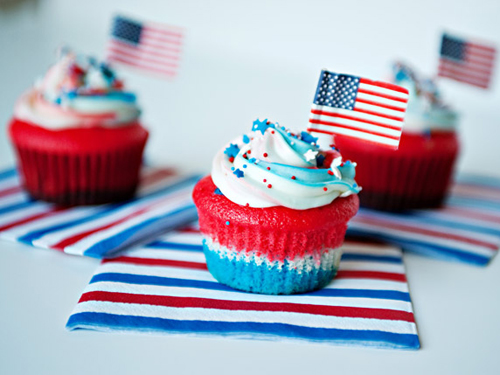
54eb8caa17368_-_fourth-of-july-cupcakes-lgn-32120142
I wish I had cupcakes.

Garnets and Guardians is the first book in my Demonic Jewels (working title) series.  The series follows Bailey Donovan, a thirteen-year-old who has recently been diagnosed with Limb-Girdle disease, as she struggles to cope not only with her illness, but also with moving to a new town and the dark discovery she makes there.  Despite everything, she remains fairly stoic, which occasionally causes drama within her family.  And yes, unlike many protagonists in the fantasy genre, Bailey’s family remains whole and supportive.

So, why did I choose to write about a young girl who is newly cripple?  I’ve actually heard a lot of theories on this in various workshops.  The one I get the most is that I’m writing what I know, or that Bailey’s a fantasy version of me, or similarly weird things.  In a lot of ways, she is like me.  She doesn’t do well with emotional displays and she likes to handle things her own way.  But her disability is nothing like mine, so she has to cope differently, which really means she’s a completely separate person from me.  There’s also the theory that I write cripple characters because they are few and far between in genre fiction and I want to see myself reflected in these genres I love.  I’ve covered that before: yes, diversity is important, but I (personally) don’t need or want characters to be cripple in order for me to identify with them.

criplit-and-dislit
Apparently, this is a thing?  Interesting.  Chose to share because of number 3.

All of that is great and I’m sure it’s why some people choose to write cripple characters, but it’s not why I did.  Honestly, I just wanted to write about a hospital full of demons.  What better way to do that than to give my protagonist a chronic disease that forces interaction with such a place?  Yeah, I chose a disease within my realm of understanding, but that’s only because I hate doing immense amounts of research.  So, for me, writing a cripple character has less to do with crippleness itself and much more to do with what fits the story and me being too lazy to look stuff up.

1331923161599_760411
Writing is hard enough without the research.

Have you ever written a cripple character?  Did you do so for the sake of diversity or was it just something you wanted to try out?  Have you wanted to write a cripple character but chose not to?  Why?  No judgment here, so feel free to share your thoughts and stories and reasons below or on my social media pages!