The Between Space

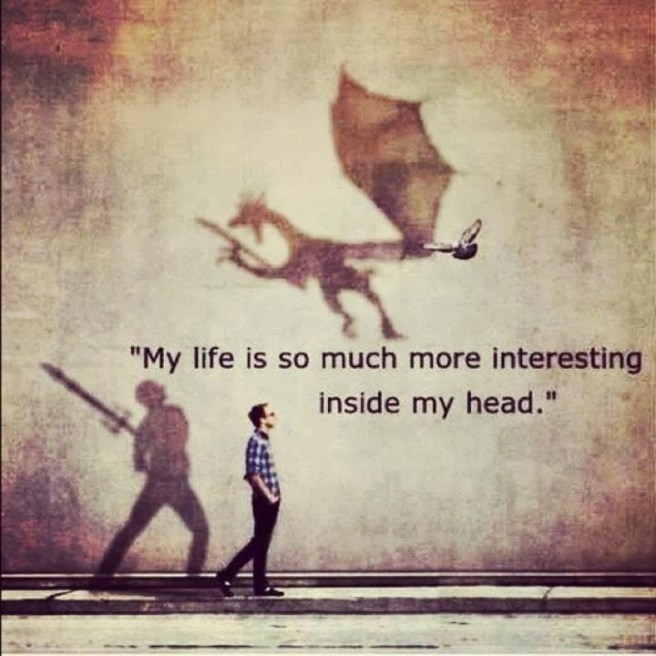
Hello, hello!  I hope those of you who had a long weekend for President’s day got to do something fun.  My weekend was quiet.  Anyway, you know that space between being awake and being asleep, where you’re never sure if you’re dreaming or if something is really happening?  That’s what I want to talk about today.  It’s the place many of my story ideas come from.  It’s not an entirely pleasant place, but it’s useful.  Sometimes.  Often, it just likes to scare me silly.  I’m really curious about other people’s relationship with this space as well, so think about sharing your own experience with me.

teddy-bears-protecting-children
Either I’m not innocent or my stuffed animals are slacking.

First, I should probably mention that I’m not a visual thinker like a lot of people seem to be, I almost exclusively think in words.  People will ask me to picture something in my mind and I can’t.  The only time I can think in pictures is when I’m super tired and drifting in and out of sleep.  When that happens, I usually start out thinking in words and they gradually morph into a kind of dream/mental movie.  I guess that’s part of my attraction to this place.  It lets me work through things differently than I normally do.

I suppose the reason that I credit this space with a lot of my story ideas is because it’s a lot easier to remember details from these half awake dreams than it is when I wake up with an idea from a normal dream.  Those ideas tend to be vague scenarios that may or may not be interesting.  They’re good story seeds, but the ideas that bloom in that weird little realm between worlds are the ones most readily written.

7220b0ada6c7ce905ca4d8951b87118e
And that place certainly is dark enough.

Granted, my time spent in that realm more often than not leads to nothing other than a few scares (those stupid jolt awake moments) followed by my mind running through all the horrific scenarios of what could have possibly woken me.  It’s usually noises.  There’re the bumps and thumps of zombies trying to get inside.  Werewolves are not an uncommon expectation.  The train horn usually conjures thoughts of serial killers and creepy clowns jumping off the train and murdering their way through town.  Most people (at least according to TV and movies) wake up assuming the wind or something equally as mundane unless they hear something after the initial jolt.  Not me.  My mind automatically goes to death and destruction and knows the only reason I’m not hearing anything else is because the culprit is luring me into a false sense of security.  I might’ve watched and read too much weird stuff as a kid.

3d2667acd3c33445c8995048628977a2
These types of thoughts usually follow the paranoia.

So, whether I’m just hanging out in the middle of random thoughts waiting to be jolted awake or having a story bloom in my head, I have an odd love for that space between waking and sleeping.  I like seeing my thoughts unfold rather than just telling myself things.  What about you?  Do you enjoy hanging out in that little realm?  Does it let you see everything differently?  As always, feel free to comment here or on my social media pages!

Plotter Vs. Pantser

Hello, hello!  It’s been awhile since I’ve really written something writing related, so I thought I should probably get back to that.  After a long day of errands and asking people what I should blog about, a friend brought up the question of whether I’m a plotter or a pantser.  Basically, do I outline my stories or do I let them grow organically.  I’m sure I’ve at least glanced over this at some point in the past two years (I’ve kept a blog going for two years???  Who’d’ve thunk it?), but I decided to take a minute to dig deeper into this seeming dichotomy.

issue7
From So You WriteI still don’t know all the abbreviations, so don’t feel bad.

First, let’s take a look at plotters.  These are the people who get a story idea, then spend hours or days or weeks or longer plotting out all of the details and creating outlines and character bios and the like (and even charts or graphs for the hardcore plotters).  Some of them plan every little thing ahead of time.  Others write out the broad strokes (major plot points and characters and all of that) but leave connecting the dots until the actual writing process.  This works really well for some people, but it’s not the only way to write.

leqoiq575v_1437536694125
Just one example of plotting, courtesy of J.K. Rowling.

On the other hand, you have pantsers.  These are the people who get a story idea and just go with it.  Characters and adventures come and go organically as the story unfolds on the page.  Many of them have no notes beyond the story itself.  Some take notes as they go, so they don’t have to keep scrolling through their story to remember what someone was wearing or whatever.  Others plot things out in their head as they go, but allow the story to ultimately dictate what happens.  They aren’t afraid of getting sidetracked by a character who refuses to do what was planned.  In other words, they fly by the seat of their pants.

As different as these two things are, I think they’re more two ends of a spectrum than separate identities.  I certainly know people who are strict plotters and others who refuse to even attempt the restrictions of planning things out, but I prefer taking the middle ground.  I fully admit that I have more pantser tendencies than not.  I’ve always had trouble creating (and adhering to) outlines.  All of my stories start organically and I prefer to let them unfold on their own, but I do get stuck sometimes when I do it that way.  That’s when I switch to plotter mode.  I write a rant (I literally whine and complain and generally grump during this whole process) to myself figuring out where I want the story to go, then once I get back on track, I switch back to pantser mode.  There’s no shame in swinging both ways.

spockkirk_ed6bcd_4777877
How most pantsers feel when dealing with unruly characters.

There’s no one right way to be a writer.  Anyone who tells you otherwise is a Liar McLiarson, so don’t listen to them.  Don’t be afraid to try plotting if you’re a pantser.  It can really help things flow better when you’re stuck.  Also, try flying by the seat of your pants occasionally if you’re a plotter.  It can be freeing and new, exciting things could happen.

What are your thoughts on plotters vs. pantsers?  Which one are you?  Or do you dabble in both?  As always, leave a comment here or on my social media pages!

Until next week!

The Most Common Writing Advice And Why I Disagree

Howdy, howdy!  I hope everyone had a fun and safe Halloween, and got tons of candy (whether you went trick or treating yourself or stole it from your kids/nieces/nephews/siblings/etc.).  Today, I want to ramble a little bit about some common writing advice that I really disagree with.  If you’re a writer, chances are that you’ve heard this statement at least once (and probably way more than that): write what you know.  On the surface, it sounds like common sense.  If you don’t know about something, how can you write about it?  But so many people take it too literally.

ch940305
No one wants to read about that, Calvin.  Unless the guy is transported into each show, then maybe.

 On the one hand, some people argue that the saying refers to emotions.  We’ve all experienced love and hate and happiness and anger, so our characters should too.  I agree with that reading of it to a point.  Characters need to express multiple emotions in order to be well-rounded.  My issue with this explanation is that we all experience and express our emotions differently, so our characters should too.  For instance, when I rage, I stew in my own thoughts and plot revenge.  I don’t really know what people who scream and cuss and break things are thinking or feeling.  Does that mean I should only write characters who stew?  No.  It just means that I have to work a little harder to understand and flesh out my characters who are screamers.

On the other hand, there are the people who think writing what they know means writing about things they’ve done or stuff that’s happened to them.  I actually started writing Garnets and Guardians because people kept telling me to write what I know.  I know about spending your childhood in and out of the hospital.  But honestly, that’s boring, so I threw in demons and references to different mythologies and a protagonist with a disease that’s fairly different from my own.  These are things that I knew little to nothing about.  Hell, my protagonist can walk.  I don’t even remember what walking feels like.  Does any of this mean I shouldn’t write about these things?  No.  It simply means I have to study up on them.  Writers enjoy research (supposedly).  It’s half the fun of writing.

11416205_10153290730191291_1790979666738184094_n
It’s kind of like that.

 I guess if I were to rewrite the quote, I’d probably go with something like “write what excites you.”  Not in a porny way, though.  What I mean is, if you’re super interested in writing about a guy who has to fight ice giants while climbing Mt. Everest, but you have no idea what mountain climbing entails, go out and learn about it.  Sure, once you learn about it, you know it, and thus the original quote applies, but it’s still up to you to study these things in the first place.  If it drives you to research something, it’s worth writing, even if you have zero experience with it.  So, write what you want.  Learn things.  Don’t limit yourself just because you’re inexperienced with something.

tumblr_manvvhrldo1r70ryuo1_500
Because Odin. And election day is soon.

 What’re your thoughts on “write what you know?”  Is there any common writing advice that you disagree with?  As always, feel free to share your thoughts and opinions in the comments or on my social media pages!

Writing The Personal: Anything But That

Hello, hello!  I really had no idea what to write about today, so I went through a bunch of those list type blogs of “topics for writers,” which usually aren’t all that helpful.  One question that seems to show up on all the lists is “what’s the hardest thing you’ve ever written?”  You mean aside from all of these blog posts?  I don’t know.  I’ve never had a difficult time with any particular piece beyond the normal troubles a writer has.  I’m uncomfortable writing in the field of science fiction and pretty much anything with a political theme, but only because I’m not used to those genres.  There’s really only one thing I actively avoid in my every day writing: anything personal.  I mean yeah, there’s always going to be a part of me in everything I write, but I’ll probably never write a memoir or anything like that.  I’m boring.  Who would want to read about my life?

Fantasy-Vs-Reality
That’s why I don’t write about myself.

I don’t care for slice of life books.  Or diaries.  Or journals.  Never have.  My life sucks enough, so I’d much rather escape into fantasy and the like when I’m both reading and writing.  Happy endings aren’t entirely necessary, but adventure and magic and awe are.  I’ve felt that way for as long as I can remember.  I’ve never really kept a diary or journal or anything like that for the same reasons.  I tried.  But it got really boring really fast.  Every diary devolved into a list of shows I watched or songs I heard.  I’m sure that type of writing is cathartic for some people, but I always preferred to avoid it.

Of course, there were times I was forced to write from a personal perspective.  You can’t take poetry writing as an undergrad without being “encouraged” (read: coerced) into writing about yourself.  I always felt dirty after it.  Especially if it was something I had to share with the class.  All the words sounded stupid as I said them out loud.  I either felt like I was bragging or complaining, both of which are things I try to avoid most of the time.  At least back then I avoided them.  I’m just an uncomfortable topic for me.

tumblr_m487hkV83u1r2eae8
Basically.

I still remember one assignment from my Introduction to Poetry Writing class that I ended up taking much more seriously than I ever intended to.  The writing prompt was along the lines of something as simple as “write a poem speaking to God” with the caveat that we had to take a cliché and make it our own.  We sat in a circle and somehow I ended up having to read last.  Everyone else wrote vague and super happy poems, then it came to me.  I didn’t even print out a copy because I didn’t want my mom to read it (she was snoopy like that).  I memorized it and offered to email it to the teacher who totally understood.  It was angry and personal and I have always thought of it when I thought of things that were difficult to write.  It’s part of the reason I started actively avoiding personal writing.

if-you-talk-to-god-you-are-praying-if-god-talks-to-you-you-have-schizophrenia1
Seemed appropriate.

What about you?  What’s the hardest thing for you to write about?  Is there a topic or genre that you actively avoid?

And, for anyone wondering about that poem, here it is:

Dear God

by Shawna Borman

I want to believe
That love is blind
And the world is kind
And that we all have time
To fall in love. 

But that’s a lie. 

I want to be loved
For who I am
Despite what I am
By someone who doesn’t give a damn
About the outside. 

But that’s not going to happen. 

I want to thank you
For saving me
From who I know I would be
At the price of not letting me be free
To make my own mistakes. 

But I can’t. 

Because…

I want to be beautiful.
I would be.
I could be.
I should be!
But this, this isn’t a matter of “shoulda, coulda, woulda.” 

I want to walk
With my head held high
And turn the eye
Of every guy
In the room towards me.

I want to be shallow.
I don’t care if they love me for what’s on the inside,
Because first they have to like me for what’s on the outside.
If the outside’s not for keeps,
No one’s going to want to dig too deep. 

And I want to hate you
For the way you made me.
But I don’t know your face,
Don’t know your name,
Hell, I don’t even know if you exist. 

But I need you to be a part of my life,
Because even though I blame you,
It’s still easier
To believe that I’m one of your creatures,
Than to know that I’m just a freak of nature.

I Might’ve Broken The Rules

Happy March!  How was your Leap Day?  Mine was actually pretty productive.  It was the first day in a long time that I met my “this is acceptable” word count (1000+ words).  I broke one of my golden rules to do it, but the writing is what’s important, right?  Rules are made to be broken and all that.  Or maybe I’m just nuts.  Or trying to rationalize things that don’t really matter.  I mean, it’s not like anyone’s going to punish me for breaking my own rule, right?  It’s just the voices in my head that complain about it.  They’ll deal eventually.  Do you have rules you stick to when writing?  Or is that just something crazy people do?

115.JPG
Nancy Holder!  Blame her for the rules thing.


I suppose the whole “rules” thing started during my first semester at Stonecoast.  Up until then, I had no rules, no discipline, and all I was writing was short stories.  I wrote when I felt like it or when something was due.  Deadline induced panic was an essential part of my process.  Then Stonecoast happened.

I was actually pretty terrified at the prospect of writing a novel, but I wanted to do it.  My mentor at the time was Nancy Holder, and she’s a super supportive type, so she encouraged me to do it.  There was no “try,” there was just “do it.”  Of course, I asked “how?”  Her response was “keep writing!”  Yeah, it wasn’t helpful at the time, but she was right (as mentors tend to be).  So I wrote, got past twenty pages (my usual stopping point), and kept writing.  Around page fifty, I wanted to stop and work on something else.  Nancy said no.

NvbOGZm.gif
It was kind of like that.


She explained that starting a new project was a form of procrastination that all writers are tempted by.  If you’re constantly stopping one thing to start something else, you’ll never finish anything.  It made a lot of sense, especially for something as large as a novel.  And thus, my first rule (the one I broke) was born.  I’d never start a new novel while one was sitting half-finished and waiting on me (aka one I haven’t given up on).  I’d wait until I at least had a first draft.  It only applied to novels, so I admit to writing flash fiction, short stories, poetry, etc.  Basically anything to give me a break here and there, but that could be finished in a few days was acceptable procrastination.

But, since I’ve been in a slump, I finally decided to say “screw it!” and started a new WIP.  It doesn’t mean that I love the old one any less, it just means I can’t get into that world right now.  Same goes for the screenplay.  I love it, but my heart just isn’t in it.  Hopefully that will change as I get back to a normal rhythm, but for now, I needed something new that no one has seen or heard about.  Something strictly mine.  Something that doesn’t have any expectations to live up to.  It can fail completely, I can trash it, and no one will ever be able to ask “what happened to that novel about that thing?”  Does that even make sense?

keep-calm-and-break-the-rules-15.png

I still have a bunch of other rules that I haven’t broken, but I guess what I’m trying to say is that it’s okay to break a rule once in a while if nothing else is working for you.  So, what are your rules?  Have you ever broken them?  Did it help?  Or am I just crazy?

The Writer’s Struggle: Cultural Appropriation

Hi all!  Today, I want to talk about something that is a really touchy subject for a lot of people: cultural appropriation.  It’s something I’ve seen tossed around a lot lately, and most of the time, I wonder if the people throwing that phrase around actually understand what it implies or if they’re just looking for something to rant about.  Honestly, it usually seems like the latter.

Do-not-think-it-means

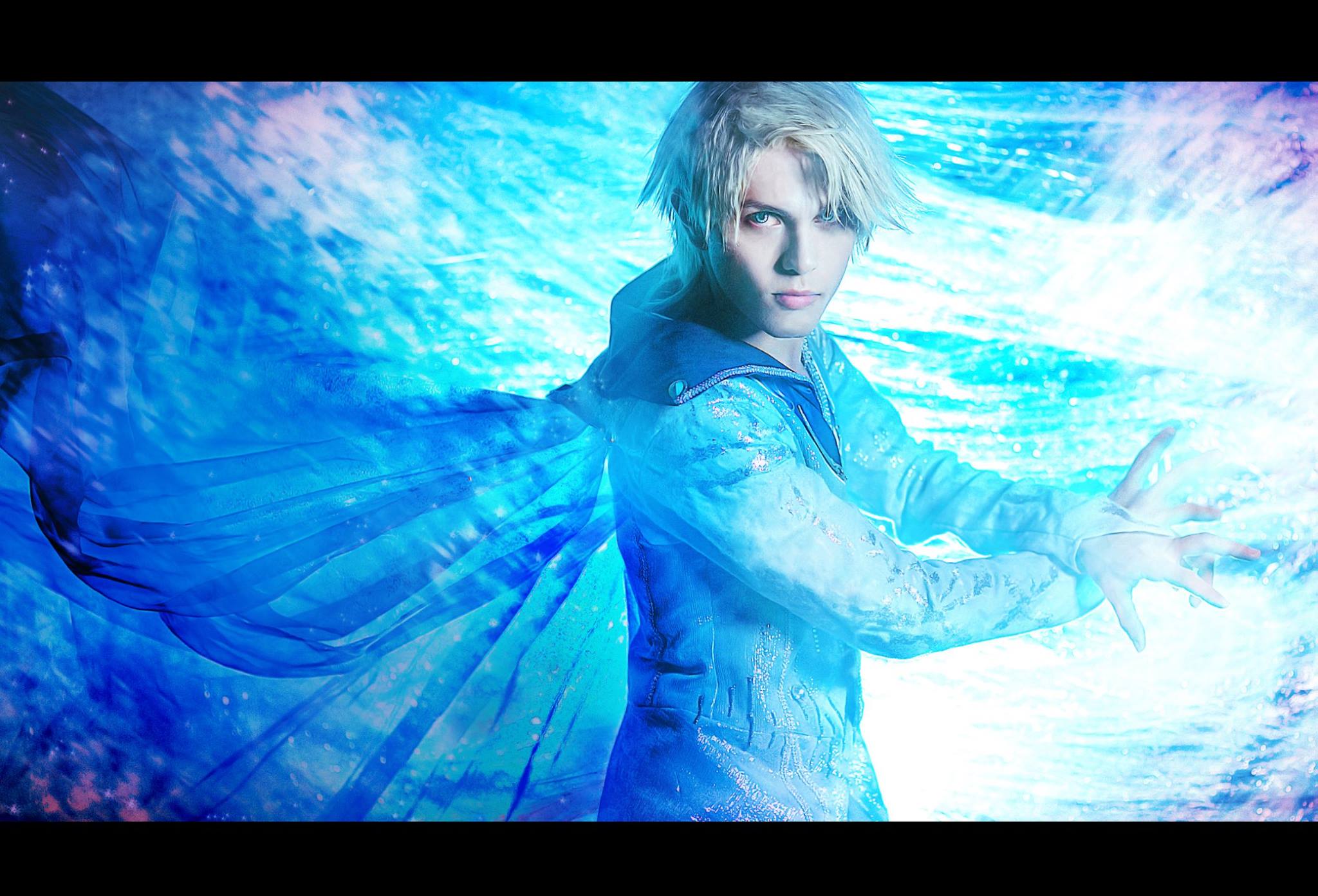
It’s something that’s seeping into every aspect of life.  It’s gotten to the point where people are afraid to study other cultures because some lunatic might come up screaming “cultural appropriation” at them when really, they’re trying to learn how not to appropriate things.  People are afraid to cosplay characters outside of their race and gender because of the same reason.  It’s ridiculous.  As long as the cosplayer isn’t doing anything derogatory, what’s wrong with an African American Elsa or an Hispanic Tiana or a white Mulan?  There’s nothing wrong with showing your love for a character by cosplaying as them.  And that’s what cosplay is about, love and appreciation of a character, not taking something that doesn’t belong to you.

10446335_457236021101270_1063410767150526854_o tumblr_n59qeaGzIX1r1uuc8o2_500

For a writer, cultural appropriation is a terrifying thing.  We’re constantly told to write diverse characters, especially when it comes to popular fiction.  That’s like rule number one in writing.  However, I’ve seen a huge increase in authors (mainly white authors) getting called out and put down for writing outside of their own cultures, no matter how well they did their research and how respectful they were.  Basically, it seems like we’re damned if we do and damned if we don’t.

Personally, I tend to blend cultures in my longer stories (I’m from the U.S., aka the melting pot, so why wouldn’t I write that way?).  I’m constantly worried someone’s going to accuse me of cultural appropriation, but you know what?  I’m not going to whitewash my stories simply because some overzealous crusaders think a white chick from Texas shouldn’t incorporate Japanese culture, Greek mythology, and all of the other elements included in my stories in her work.  I like a colorful world that expands beyond my own horizons.  Sorry, not sorry.

rainbow_stallion_by_annmariebone-d6tdb1o

I do, however, follow a few rules when writing that I hope will deter the cultural appropriation shriekers if/when I get published.

1. I do my research!  Granted, I use a lot of mythology and, when there’s not a lot to go on, I tweak certain stories to fit my books, but I’m never disrespectful about it.  I know I’ll catch flak from some people for it, but I’m prepared for that.

2. I don’t rely on stereotypes when creating my characters and worlds.  Most stereotypes are quite insulting, a personification of the worst aspects of a person.  If something fits the character, I’ll use it, but it will be tempered by other aspects of human nature to create a fully fleshed out person.  At least that’s my goal.

3. The one don’t on my list is “don’t be a dick.”  I never use anything with the intention of making fun of or insulting a culture.  Research and not relying on stereotypes really helps with that.  Don’t get me wrong, my characters can be incredibly rude to each other, but there’s always a purpose for it in the stories.  It’s never an attack on any culture.

end_rant_small_poster

So, to sum up…  Go learn about that culture you’re interested in (and all of the others)!  Go cosplay as that character you adore!  Go write all the things!  Just don’t be a jerk about it.