Thoughts On HALF PAST

Hello, hello!  Welcome to the first monthly installment of book reviews!  A friend recently introduced me to NetGalley, a site through which publishers offer ARCs (advance reader copies) in exchange for honest and unbiased reviews.  While going through their options, I came across Half Past by Victoria Helen Stone, which came out September 19th, 2017, and decided to give it a shot.  First and foremost, I have to thank NetGalley and Lake Union Publishing for the ARC.  Here’s my review.
51n7fhiyAwL._SY346_
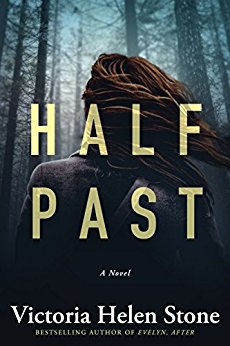
The cover is nice.

I originally chose to read Half Past because it sounded interesting.  Hannah Smith, the 45-year-old protagonist, has returned home to rural Iowa in order to take care of her ailing mother and recover from a divorce and being let go from her job.  She discovers that she might be adopted and decides to go on a journey of self-discovery in the hopes of finding out about her origins.  The back blurb hints at a dark story, so even though it’s not something I would normally pick up, I tried it.

The whole premise of the novel turned out to be flawed.  Hannah is O- blood type and she discovers that her mother who has dementia is AB+.  The narrator mentions that anyone who took high school biology knows this isn’t possible, and a brief Internet search seemingly supports that, but I happened to have a doctor’s appointment while reading this book and she said it technically was possible.  So, I dug a little deeper (it wasn’t even a difficult search) and discovered articles by a geneticist who teaches at Stanford that explain that while it’s extremely rare, there are a few ways an AB parent can have an O offspring.  And if it was just Hannah assuming she knew everything, I could overlook this, but a doctor tells her she must be adopted instead of telling her she needs to consent to more tests to be positive.  The whole thing tainted my view of the book, but I kept reading.
QtFZ0PR
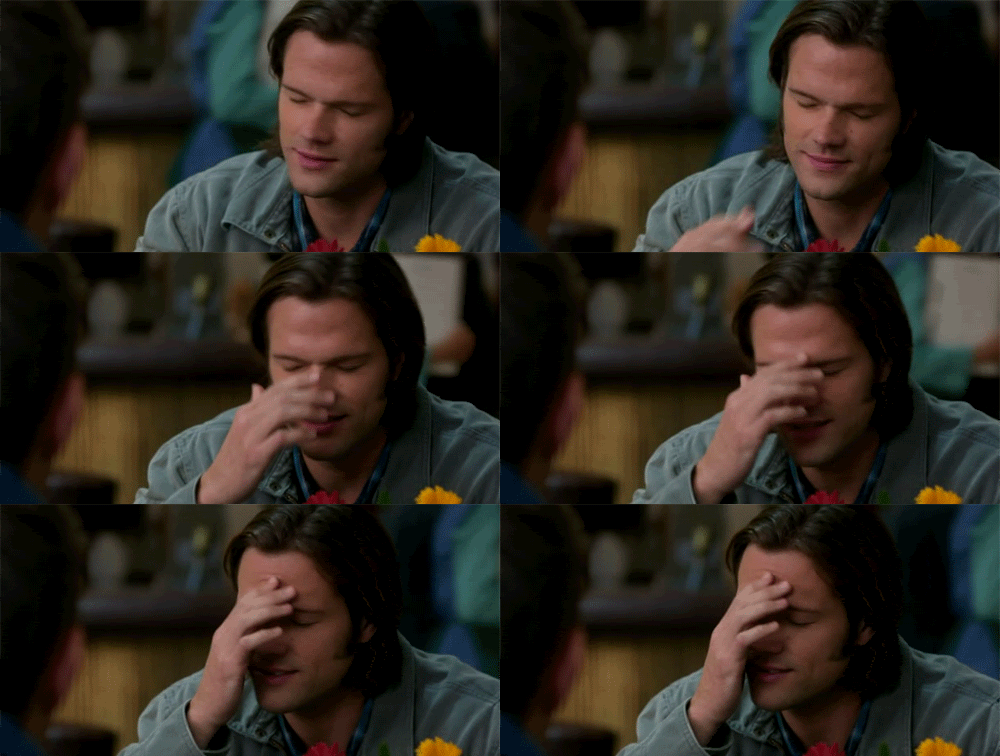
Facepalm was an accurate reaction throughout the book.

Then there was Hannah herself.  Honestly, she acted more like a fifteen-year-old than anything.  Everything was a major drama that she couldn’t handle, so she constantly ran away and blamed everyone else.  She complained about never fitting in, but she never made an effort to do anything about it.  And I’m sorry, but at 45 years old, you should know that the woman who raised and loved you (because her childhood was a happy one) is your mom.  You don’t run away from her in her time of need to search for your “mom.”  I had no way to connect to Hannah until the very end when she finally takes a little responsibility for everything, but by that point I already disliked her.  If she were younger and this was a story about her finally becoming an adult, I probably would’ve enjoyed it a lot more.  As it is, she came off as a flaky, annoying, crybaby.

The story itself was a quick, easy read.  It felt a little predictable, but my mind goes to the dark places a lot easier than other people.  I did think it was a little too drawn out.  If I found out I was adopted and the only lead I had was a strange birth certificate, the first thing I would’ve done was look for the witness listed on it.  Maria Diaz ends up being an afterthought when nothing else pans out.  I think Hannah conveniently forgot the name so she could go on a vacation.  That’s what it felt like anyway.
tenor (1)
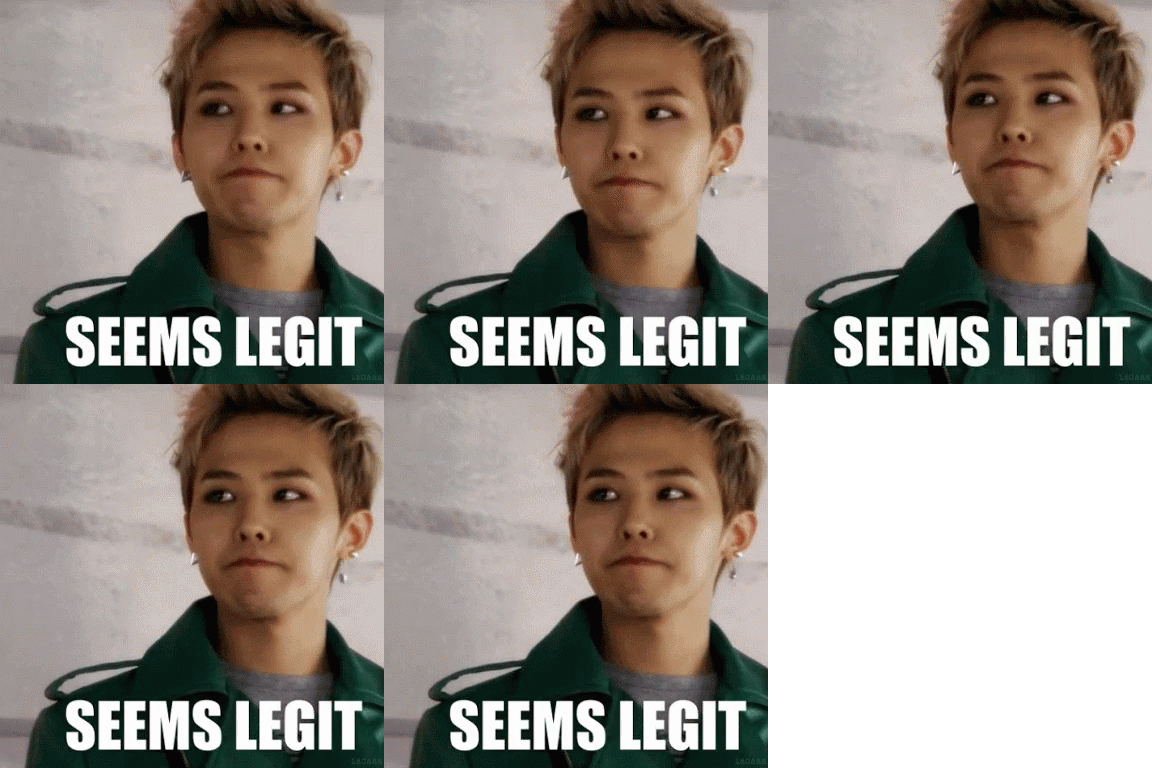
This was the look that accompanied the facepalm while I was reading.

I will say that I enjoyed the writing style.  It was comfortable and kept me reading despite my issues with the story and with Hannah.  While I wouldn’t put it on my list of favorites by any means, I wouldn’t tell people not to read it.  It simply wasn’t my cup of tea, but other people might enjoy it.

starstarstarstar outlinestar outline

Ultimately, I’d give it three out of five stars.  I wasn’t a fan and I think some things should’ve been better researched, but beyond that it was well written.
Character Questionnaires: Yes Or No?

Howdy, howdy!  While I was searching for something writerly to blog about, I kept coming across ideas for character questionnaires (getting to know your characters, things to know about your character before you start writing, etc.).  The questions varied from basic stuff about looks and personality to weird things like “what’s in their fridge right now?” (the main character of my novel-in-progress currently has pizza, coffee creamer, and pouches of blood in her mini fridge, in case you were wondering).  And, at first, this seemed like a really neat idea, until I came across a list of 1,000 questions I was supposed to know answers to for my characters.  Yes, three zeroes.  It seemed pretty excessive to me.  I started to wonder when something like that went from a useful tool to being something to procrastinate with.

QQ
Pretty sure this would be the reaction from my novel-in-progress’ main character and her bestie.

I just feel like there are things you should naturally know about your characters before you start writing, even without a questionnaire.  Name/nickname, the basics of how they look, main personality type, any distinguishing features.  For me, these are all things that come naturally with the voices in my head.  I don’t need to write them down, because I know them.  Occasionally, I’ll make a conscious decision to change an eye color or hair color if I have too many blue eyed blondes or whatever, in which case writing it down somewhere is helpful.  But all the questionnaires that start off with these things feel more like a way to procrastinate than anything useful.  On the other hand, if you’re the type of writer who works on multiple projects at once, I can see how you might mix up characters without having some kind of reference sheet.

Then, there’s the group of questions about character motivations which seems a lot more helpful to me.  Knowing why your characters do things helps when you’re writing and trying to decide how they’ll react to different scenarios.  It makes writing believable scenes easier.  Say your main character freaks out when their roommate pulls out a sword in a non-threatening manner.  Why?  Well, if you know they witnessed their sibling getting stabbed, you can hint at that or build around it even if the reader doesn’t know it yet.  Something less severe: why does your main character throw a tantrum every time her boyfriend steals her Oreos even though she’s a grown woman?  Maybe her siblings always ate all the cookies when she was a kid.  If you know their motivation, you can figure out how they’ll handle things realistically.

4hnrl
A completely acceptable reaction.

Last, they have the really out there questions.  The “what’s in the fridge” and “favorite sex positions” types of things.  These are the ones that I’m almost positive people answer to feel productive, but they’re really just procrastinating.  I don’t think my character’s preference for red Gatorade over blue has any impact on my story, unless there are monsters in the Gatorade, then maybe.  These are the questions that are fun if you’re having trouble writing one day and are hoping answering them will spark something.  Otherwise, you’re just goofing off.  And that’s okay!  I understand the desire to put things off, but don’t lie to yourself about it.

i-dont-procrastinate-i-just-do-things-later.gif
It’s totally procrastination.  Own it.

Overall, I don’t find character questionnaires that helpful.  They’re fun and something to do if I’m stuck or really don’t feel like writing, but, honestly, I’d rather just write most of the time.  What about you?  Do you fill out character questionnaires wen you create your characters?  What are some questions you find the most useful?  Which ones do you ignore or consider unhelpful?  Feel free to comment here or on my social media pages!

The Tendency To Assign Blame

Hello, hello!  Last week, I had a really good writing week, despite having a day of errands (after which I wrote a book review blog post even though I didn’t want to/have to) and taking a day off because I felt crappy.  I met all my goals and even had time to watch some anime along the way.  But looking back, I realized that I never really took credit for my productivity (not last week or ever, that I can remember).  At least, never for the little every day things.  I have this weird tendency to blame inanimate objects for my success, like taking credit for it will somehow ruin it.  Or maybe because inanimate objects have awesome powers that make me productive.  I don’t know.  I’ve just always done this.

67d7f9f70f4bbc42e0e008215be3d1e2db88acc654b8d238748b617c0627f25d
I do that too.  You’d think they were people.

I’ve seen a lot of people do this.  Instead of saying they rocked that day, they give all the credit to some good luck charm or special t-shirt or whatever.  And I totally understand the compulsion to have something tangible to blame for things that otherwise seem to come from thin air, because it’s easier than acknowledging that it’s all you (especially if you’re terrified of failing and need something to blame for that too, just in case).  But I sometimes think I’m weird because I don’t have just one special item I blame for everything, good or bad.  I use whatever happens to be handy.

For example, last Saturday I was feeling particularly procrastinate-y (I don’t know how else to describe it), and a neighbor brought over a little rubber rat for me as an early Halloween gift, so it sat on my computer watching me while I worked.  At the end of the day, when I gave Facebook my boring little update on what I did that day, instead of saying that I fought off my procrastination and wrote the words, I said that I wrote because my new friend was keeping an eye on me.  I’ve blamed shirts.  I’ve blamed pictures.  I’ve blamed dolls.  The more I think about it, the stranger I think I am.

21430152_10154837514876716_7380031451789172606_n
My little rat friend.  His name is Yuki Sohma, like from Fruits Basket.

Part of me thinks it’s because I’ve always been easily annoyed by people who brag too much, so I don’t want to become one of them.  Ooo, I wrote words and did all the other stuff I needed to do… big deal.  Right?  But at the same time, I like seeing my friends celebrate all their accomplishments, no matter how small.  So, why shouldn’t I celebrate mine?  Probably because it’s a super thin line between celebrating and bragging and I don’t want to cross it.  I guess blaming inanimate objects makes it feel less like bragging and more like praising whatever inspired my productivity that particular day.

But screw all that!  Some days, you need to own your accomplishments, even the tiny ones.  Especially when people act like you aren’t doing anything.  Stop blaming inanimate objects for your successes.  You did it.  You rock.  And it’s okay to pat yourself on the back once in a while.

self five
We could all be a little more like Barney.  Just a little, though.

What about you?  Do you blame your successes (or failures) on inanimate objects?  Do you have a lucky item that lends you its powers from time to time?  Or do you take all the credit for yourself?  Feel free to comment here or on my social media pages!

Three Golden Rules For Writing That I Never Follow

Howdy, howdy!  I recently talked to a friend from my critique group about some comments I sent her on a story, and she mentioned the notion of writing rules.  These are the things that get constantly reiterated in writing programs (like our MFA program).  We’re told all of the things we can and can’t do.  Meanwhile, authors who are getting published are breaking all the rules and no one else seems to care.  Does that mean the rules are really suggestions?  No, not necessarily.  It simply means people are choosing to break the rules that don’t work for them or their stories.  Some of them do this more successfully than others, in my opinion.  But I’m glad I learned the rules because breaking them deliberately tends to work better than breaking them because you don’t know any better.

Rules
Sure they are.

But here are three of the rules of writerhood that I never follow:

1. Write EVERY day, even on holidays and when you’re sick.  Because everyone knows you’re not really a writer unless you write a bunch of words every single day and never take a break.  Except, that’s complete bullshit and anyone who tells you otherwise is a Liar McLiarson.  Yes, it’s good in the beginning and helps train your brain to take writing seriously, but beyond that, it’s just not possible and you shouldn’t feel obligated to work that way if it doesn’t help you.  Personally, I need a weekend, even though I mostly just sit around and play mindless games.  Self care is important and you deserve it.  Plus, who wants to write after they’ve been up all night projectile vomiting (just an example)?  It’s okay to take breaks.

2. ALWAYS read your work aloud.  This is great advice if you’re practicing for a reading or if something doesn’t feel right and you can’t figure out what it is, but I don’t like reading things out loud.  For one, I feel stupid doing it.  But mostly, I don’t want to read my novels out loud because I’m lazy.  It would take forever at the pace I speak.  Plus, the voices in my head make reading silently more interesting for me and I can hear when things sound abnormal in their voices, whereas if I’m reading aloud, I might find out where I stumble over phrasing, but I’ll miss things that feel natural to me even though my character wouldn’t actually say it.  So, reading everything out loud isn’t for me.

quote-the-road-to-hell-is-paved-with-adverbs-stephen-king-57-42-06
Stephen King said it, so it must be true!

3. Adverbs are BAD.  This is one of those rules that I ignore when I’m writing, but follow when I’m revising.  Yes, there’s usually a better way to say things than using adverbs, but I’ll be damned if they aren’t awesome in a first draft (which is the writing part of writing for me).  It’s difficult to think of the perfect phrasing when your goal is to get words down on a page.  That’s where adverbs come in handy.  Sure, there are better, more evocative ways of saying “she walked slowly upstairs,” but it’s a perfectly acceptable phrase for a first draft.  You can decide in your edits whether she trudged, or hobbled, or snuck (sneaked?), or whatever.  But adverbs are great placeholders until that point.

some-of-the-wkyu2z
Such a rebel.

So yeah, those are a few of the golden rules of writerhood that I break.  What about you?  Are there any rules of your craft that you don’t follow?  Anything that seems like it was created by an overzealous person who didn’t understand that not everyone works the way they do?  Feel free to share your thoughts, comments, etc. here or on my social media pages!

September Is Coming

 Hello, hello!  August is coming to a close, bringing the beginning of September with it.  I’ve been having trouble finding the motivation to keep up with my work, despite my current novel attempt being enjoyable, so I thought I would post my main goals for the coming month right here.  I find it more difficult to avoid the things I need to do once someone else knows what my goals are.  The potential for public shame is an awesome motivator.  Plus, I know I have a few friends who will crack the whip at me if they know I should be doing things and they catch me on Facebook instead.

whip
Whips and pleather can be motivational too, I guess.

Goal 1: write 18,000+ words.  I know I’m capable of writing 4,500 words a week and September is about four weeks long, so I should at least be writing this much.  Only words toward the WIP, short stories/flash pieces, and the blog count towards this number.  And only words over my current written words, not revisions.  It’s the goal I’ve been struggling with the most, so if I’m slacking, feel free to break out the whip.

Goal 2: read at least 2 books.  One book will be for my review on the 27th, and the second will be for a book club I just joined.  I’m also currently reading a book with my writing group, but we’re taking it slow, so I might not finish it by the end of the month.  I admit that I don’t read nearly enough, so I’m trying to change that.  I was able to read 2 books a month at Stonecoast and keep up with my writing, so it seems like a reasonable thing to do.

read
That’s what they keep telling me, anyway.

Goal 3: query 16 more agents.  I’ve been querying four a week for what seems like forever now.  No, I really have no clue how or why I settled on the number four.  But I do know that I’ve currently sent out 84 queries and have no idea how many rejections/assumed rejections (because some agencies don’t send out rejections, but give you a “if you haven’t heard back in x weeks we’re passing” instead) I’ve gathered up and I don’t feel like checking my spreadsheet right now.  It’s a numbers game, I’m told, and I’ll keep trying for a while longer.  But I’m thinking 100 sounds like a good place to take a break and regroup and wait to see what happens with the queries still in limbo.

Goal 4: submit at least one thing to my critique group.  The group seemed to go on hiatus for the past couple of months as our members used the summer for some much needed family time.  But now that school has started, critique submissions are starting to trickle in and I want to be among them.

Goal 5: make time to text/message some people besides the usual two or three.  Because I’ve been a shitty friend and I know that.  I promise I’ll try to be better, but I usually fail miserably at this type of stuff too.

201508_1302_biidd
And I don’t even talk to them much.

So, those are my September goals.  It feels a little overwhelming to see them written out like this, but I can do it.  And if I can’t, you get to publicly shame me!  What about you?  What are your main goals for the month?  Feel free to share them here or on my social media pages!

See you next week!

How Short Is Too Short?

Howdy, howdy!  I’ve noticed a strange trend in the world of short stories lately: they keep getting shorter.  It kind of reminds me of cellphones.  They started out as these huge, bulky things that people wanted smaller and smaller, then all of a sudden people wanted them bigger again.  Is that what’s going to happen with short stories?  I don’t know.  But I do know that short stories are getting smaller and smaller at the moment.  When I first noticed it, there was flash fiction (1,000 words or less), then micro fiction (100 – 500 words depending on who you ask) popped up, and now I’m seeing a lot of talk about 50 word stories.  It’s not that I mind this trend, I’m just curious about what it means for the writing world in general.

mobile-phones-evolution-6
I suppose we’ve reached the early 2000s by comparison.

Personally, I enjoy writing and reading flash fiction.  It’s a challenge to write a story that feels complete and satisfying in under 1,000 words, but it’s possible.  Micro fiction, on the other hand, I tend to look at more as poetry or as excerpts.  It’s rare for me to find one that works as an actual story in my mind.  And I have a feeling I’ll be looking at these 50 word stories the same way.

Don’t get me wrong, I’ve written things that were super short as an exercise in conciseness, but I never considered them to be worth submitting anywhere.  I never realized it was something people were interested in to be honest.  And why are people so interested in them?  Is it because of the time we live in?  In the day and age of Tweets and instant gratification, do we just not have the attention span to read something longer?  The cynical part of me believes that has a lot to do with it.  Another part of me thinks it started out the way I started doing it, as a personal challenge, that someone decided to share with other people who took the challenge upon themselves.  Whatever the reason, it’s apparently a thing now.

it-s-a-writer-thing-unisex-tri-blend-t-shirt-by-american-apparel
It’s okay.  I’m a writer and I don’t entirely understand.

I’m all for conciseness, but how short is too short?  Are there going to be 10 word stories next?  Serious questions, I’m not being facetious.  I was always told that a story should have a beginning, middle, and end.  That was the golden rule when I started writing.  But nowadays, some stories start in the middle and only hint at a beginning or even start at the end and that’s all okay.  I don’t mind things breaking the rules if it works.  I’m curious though, when a reader has to build a story in their head around the 50 or 100 or however many words they get, can the author still really take credit for the story?  Yeah, the words planted the idea, but the reader had to do most of the work.  Maybe that’s the whole purpose of stories that short, to make the readers work for it.

overthinking
I know I’m overthinking it.  It’s what I do.

I don’t have the answers, but these are the kind of things I think about.  What about you?  What are your thoughts on 50 word stories and this trend of short stories becoming shorter in general?  Feel free to post your thoughts and comments here or on my social media pages!

Thoughts On THE SCORPIO RACES

Hello, hello!  Since I’ve been struggling to come up with ideas for blog post topics, I’ve been thinking about doing a monthly book review to ease my blog load a bit (I’d still be my usual random self the rest of the time).  Maybe the last Wednesday of every month starting in September.  Would that be something people are interested in?  Of course, I would review more recent books or even ARCs (advanced reader copies of things soon to be released) when I can get my hands on them, because I realize that I’m totally reading older stuff right now.  Anyway, feel free to let me know if it’s a completely stupid idea or if a different day would be better or whatever.  You can do that here or on my social media pages!  Let’s get on with today’s actual topic.

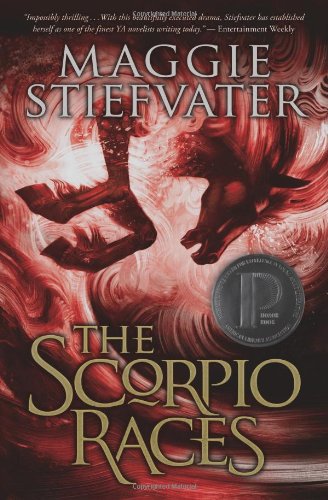
51l3TFMwN6L

On Sunday, I finished reading The Scorpio Races by Maggie Stiefvater, which came out in 2011, so I’m late to the party.  Anyway, my initial reaction, posted on my personal Facebook, consisted of: Might’ve spent three hours finishing reading a book today. There were probably tears. Strong, manly tears. Definitely not an ugly cry. Okay, maybe a little ugly.  To which a friend inquired about what book could inspire such a “glowing recommendation.”  I’m so glad I have friends who understand me, even when I ramble about things making me cry.  Because I loved this book.  Yeah, there were things left loose at the end and stuff I wasn’t entirely sure about, but it’s still one of the best books I’ve read lately.

It’s a YA fantasy, so there’s a lot going on in the background from romance (okay, that’s technically one of the major plot points) to family drama to life on a small island.  But the whole reason we get introduced to this world is because Puck’s (the female protagonist’s) brother says “I’m going to do this thing!” and Puck responds with “Well, you can’t because I’m doing this other thing!” without thinking about the consequences.  And everyone one the island tries to talk her out of it because she’ll probably wind up dead or they try to intimidate her into not doing it because it’s a man’s sport, but she keeps insisting that she has to do the thing even before it becomes a necessary thing for her to do.  Meanwhile, in her head, she’s thinking “Why did I say I was doing the thing?  How stupid can I be?” which is really relateable and endearing, especially when the majority of YA protagonists refuse to admit they’re being stubborn idiots.  Puck acknowledges it and does the thing anyway.

the thing
How pretty much every YA novel starts.

At the end, I admit that I was left with a lot of questions.  What was the point of the subplot between George Holly and Annie?  Who was dressed as Epona?  What happened to Brian?  Because it was looking like there was going to be a little love triangle for a minute there, and then he just disappears.  But all of my questions were little things that didn’t really matter in the grand scheme, so I can get past them.  Otherwise, the ending was satisfying.  You get the feeling that life on the island still goes on, even though it’s a standalone novel, which has kept my thoughts traveling back to Thisby the past few days.  But there’s still this sense of closure, like this part of their lives is done and they’re moving forward.

952114
It’s a little like we get to see one of those moments and then life goes on without us.

Also, I wanted to mention the writing style.  The Scorpio Races was one of those books that feels poetic without using a bunch of words no one knows and without using an excessive amount of words in general.  It flows, kind of like the sea.  Sometimes, it’s smooth and relaxing while other times it’s short and choppy.  In other words, not only was the story itself fun and engaging, but it was easy to read.

Ultimately, I’d rate it a 4.5 out of 5 and recommend it to anyone who likes YA or love stories or horses or good books in general.

Until next time!

Five Things I Couldn’t Live Without As A Writer

Howdy, howdy!  Lately, I’ve gotten back into a pretty steady writing and reading rhythm with this new book.  My current novel-in-progress is something I’m still excited about, even after the “new” has worn off.  I’ve also found a book that I’m enjoying reading, so that helps a lot.  But even though my writing rhythm has changed during this new process, there are still a few things that I couldn’t do without during my writerly time, things that have stuck with me through all of my writing processes.  I thought I would take a minute to share them with you.

typing.gif

1.  Writing stints.  Most writers call them sprints, but that implies a race and I’m not comfortable with that since I type fairly slow.  Anyway, these are when I get together with a friend or two, we set word count goals for ourselves, then write for an hour, check in with each other, and start all over again for a second hour.  It’s not a regular thing anymore, but it really helps on those days when writing is hard.  And we don’t have to do it at the same time (though it’s more fun when we do), as long as we check in at some point.

2.  Eye candy or regular candy, I’m not picky.  Writing is surprisingly draining, so it’s important to refuel and relax occasionally.  For me, that includes music videos with my favorite pretty males.  Chocolate also helps.  And yes, I totally use the post-writing haze as a rationalization to objectify people (males and females alike) and indulge in sweets.

cthulhuabsinthe__40844_1353981445_300_320

3.  Specific t-shirts.  I swear I’m not one of those people who have a writing outfit or something like that, but I do have a few shirts that seem to improve my writing mood.  I mean, who wouldn’t want to write when they have Cthulhu on their chest?  I tend to be more productive when I’m wearing either of my Cthulhu shirts.  My Little Mermaid shirt is also showing promise given how much I achieved the last time I wore it.  Some shirts just seem more energizing than others.  Don’t judge me until you try it.

4.  Mirrors.  This is probably just a weird quirk of mine, but I have trouble focusing when I can’t see what’s going on around me.  The easiest way for me to do that is with mirrors.  If I hear a funny noise behind me, I only have to glance to either side to see what it is.  It cuts down on excuses for me to turn away from my computer when I’m working, which helps when I’m looking for a reason to avoid writing.

introvert

5.  A severe dislike of phone calls.  Focusing on writing is so much easier when you have zero desire to make a call or answer a ringing phone.  I don’t mind texting, but admit that I don’t answer them right away when I’m writing or reading or eating or unless it’s some kind of emergency… no wonder people rarely text me.  Anyway, being an introvert helps with writing time.

What about you?  What are five things your writerly or artistic side couldn’t live without?  Feel free to share your thoughts or comments here or on my social media pages!

See you next week!

Thoughts On KUSHIEL’S DART

Hello, hello!  Welcome to August.  Where has the year gone?  Recently, I’ve been trying to read Kushiel’s Dart by Jacqueline Carey, which was on my short summer reading list.  While it’s a relatively long book (900ish pages), the fact that I’m still stuck around page 100 doesn’t bode well for me finishing it.  In fact, I can pretty much guarantee that I won’t be reading the rest of it.  I feel bad, because a good friend recommended the book, but I just can’t get into it.  So, I thought I would give my thoughts on it thus far before I stash it away, deep in my bookcase, and grab something else to read.

81qfrKAYBaL
“Sophisticated” = too mature for me, I guess.

First, I want to say that I had high hopes for this novel.  The plot sounds really interesting and the way the main character, Phedre, was described to me made her sound amazing.  I’m sure when she grows up (she’s currently 16 where I stopped), she’ll be a badass.  But there’re a lot of things that I just can’t get past about this world.

For starters, the Court of Night Blooming Flowers.  It’s basically a bunch of high-end brothels, which I am totally fine with and was intrigued by.  At least until it started getting into the details where the children that the houses take in, either because the parents can’t care for them or they’re born into the house, are coerced (they make it sound like it’s a choice, but the kids are groomed for it from day one) into learning the “ways of Naamah” (sex) when they hit the age of 14 in order to pay back the debt they incurred by being raised in the specific houses.  Granted, Phedre escapes this by being purchased by someone who puts off her actual training until she’s older (she’s 16 and still a virgin when I stopped reading).  If it were a normal bodily exploration thing, I wouldn’t think twice about it, but these are kids being used to make money. I can’t get over the icky feeling I get from it, even though I understand that this is the norm in that world.

wtf042.gif
This is me trying to read this book.

There’s also the background story about how an angel, Elua, decided to go on a walkabout to find people who would accept him and was followed around by some companions because even other angels worshipped him.  While on this walkabout, Naamah prostitutes herself to get the stuff Elua needs (from his freedom when he’s imprisoned to his food).  Because that’s what women do, apparently: they sell themselves to take care of a perfectly able man.  Thus, prostitution became a holy act and that’s why the Night Court exists.  Which is actually a pretty cool story (except the whole doing it for a guy part).  And no one is supposed to be forced into prostitution lest it sully the act.  But, like I said, when a kid is groomed for it their entire life, it certainly feels like coercion to me.

Despite all of that, I would probably keep reading for the main storyline, but the writing style is what’s really stopping me.  There’s a lot of flowery, purple prose.  It seems like every sentence contains at least one adverb.  Most of the time, I feel like the author is just trying to show off how big her vocabulary is.  And that’s a huge turn off for me.

futurama-fry-so-many-words-eyes-glazing-over
It’s true.

I apologize to my friend and anyone else who loves this book, but it’s not for me.  Maybe it gets better.  Perhaps in a few years, I’ll be mature enough to appreciate it for the “sophisticated fantasy” it’s claimed to be.  But for now, I’m putting it away and turning my attention elsewhere.

Always Changing

Hello, hello!  As I mentioned in last week’s post, I was planning on starting a new novel in order to respark my writing passion.  I started it on Saturday and have worked on it regularly since then.  I admit that I’m still not up to my usual word count per day yet, but whenever I open the file, I’m filled with the desire to move forward instead of dread.  That’s a win!  But, as I noticed with my last novel attempt, this novel has its own flow and wants to create its own routine.  I don’t remember having to adapt to new writing habits with every new short story I wrote, but apparently novels are different beasts entirely and each one is going to require special treatment.  Today, I wanted to ramble a bit about how my routine has changed with this novel compared to the other two of which I have (at least) completed first drafts.

change all the things
When you sit down to start a new novel and everything is perfect, then the novel decides your previous routine isn’t good enough…

My first novel was written completely in pantser mode.  Music from my iTunes (which basically runs the gamut of styles) played in the background for almost every writing session.  When I hit snags, I usually figured everything out after random bursts of subconscious ideas.  And in the end, the first draft was an unreadable mess that took another year or longer to clean up.  It was fun.  It was hard.  It was draining.  But I got it done with plenty of help from my Stonecoast mentors and compadres.  Honestly, if I hadn’t had help and people telling me that I had to finish it, I don’t think I would’ve been able to keep going.

The second novel that I actually finished (I started one between them, but got stuck halfway through because I stepped too far outside of my comfort zone), was wildly different.  I had the first half plotted out and knew where it would end, but switched to pantser mode to connect the beginning and end.  It was written mostly in silence because music distracted me.  When I got stuck, I’d actively plot things out in my head, but rarely thought about it otherwise unless I was working on it.  I wrote it in about seven months, a record for me, with little help.  Only a handful of people have actually seen any of it.  But when I read it to start revisions, I was surprised that it made sense and flowed as well as it does.  It still needs a lot of work, but I’m happy with how it turned out with that routine.

tenor
When you’re down and don’t want to do anything, but the new novel idea won’t leave you alone.

Again, I started and stopped a novel before deciding to switch to my novel-in-progress.  I was in a position where I didn’t want to write anything when this idea started pestering me.  I’ve got the major plot points figured out and there hasn’t been a night that’s passed by without me laying awake in bed plotting out the next scene.  It’s a little scary to think I might be turning into a plotter on this one.  I’ve tried writing with iTunes and in silence, but neither feels quite right, so I’m going to try my CDs (my teenage anthems sprinkled with some more recent music) next.  I’ve also had the urge to find reference pictures for my characters, which is something completely new for me.  I never needed pictures of my characters before, so part of me thinks I’m just looking for excuses to feed my need for eye candy, but I’m going with the flow and looking for some.  Granted, this is just the beginning of the process.  I might revert to pantser mode later on.  But the new process feels right so far.

Hiro from Nocturnal Bloodlust is basically Jyou (one of my protagonists).

Maybe I’ve just been refining my technique with each new novel or maybe my routine really will have to change with each new novel.  Either way, I’m just happy to be enjoying writing again.  It’s been a while since I could say that.  What about you?  Do you notice changes in your writing routine between each novel/story?  Or have you found something that works consistently for you?  Share your thoughts, comments, questions, or whatever here or on my social media pages!