Finding Your Genre

Hello, hello!  When submitting to agents, one of the most common questions a writer has to answer is what genre they write.  Sometimes, this is a really difficult thing to explain, especially if you’re not quite sure yourself.  Granted, I know some writers who can tell you what they write down to the subgenre’s subgenre.  But, I’m not one of them.  And honestly, they kind of freak me out (but I still love them).  I never really understood how people could stick to such narrow categories in order to be a specific type of writer.  It always seemed constrictive to me.  But I eventually fell into a genre and it felt good to know where I belonged, even if I do have a tendency to wander away from it.  So, I thought I’d share how I found my genre.
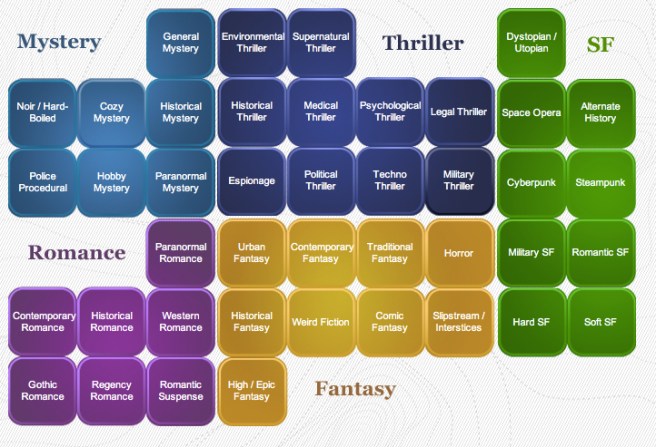
genre-map
A genre map… and this is just the basics, not including YA and the like.

When I first got into Stonecoast, I had people asking me what I wrote and my go-to response was horror.  At the time, it’s what most of my writing vaguely (and not so vaguely) fell under.  But the truth was, I was still searching for what I was most comfortable writing.  I liked dabbling in all kinds of genres, and still do.  It was always fun for me when I stepped outside of my comfort zone, so I never really felt right restricting myself with genre labels.  Don’t get me wrong, horror was and will always be my true love, but it’s not an entirely accurate description of my writing.

It wasn’t until my fourth semester, during my first half workshop with Nancy Holder (who had also been my mentor my first semester), that I started narrowing in on what genre I felt most comfortable in.  When I was on the chopping block, Nancy said my story was “vintage Shawna.”  She went on to explain that in her time working with me, she noticed that I tended to write about younger (usually teenaged) protagonists who stumbled upon hidden worlds.  She wasn’t wrong.  Apparently, I had fallen into the YA (young adult) realm when I wasn’t looking.

sub-buzz-29538-1490304640-6
I admit this is totally what I thought of when I was accused of writing YA.

It wasn’t exactly my genre of choice, but YA chose me, so I couldn’t argue with it.  Granted, I’ve managed to keep my horror leanings even in most of my YA work.  Demons and psychological torture and all of that still play big roles in my writing, but there’s also a stronger thread of good old-fashioned fantasy as well.  Now, I mostly tell people that I write supernatural YA (not to be confused with paranormal romance) or just YA fantasy.  It’s closer to the truth for the majority of my work.  Though, I do have pieces that don’t fall anywhere near those genres, because writing is hard enough without restricting yourself to one genre.

Writingishard
It really is sometimes.

So, I found my genre when I wasn’t even looking.  Actually, I guess it found me.  But I will always suggest stepping outside your genre, whether when reading or writing or both.  It’s fun and challenging and you can learn a lot when you’re working outside your comfort zone.

What about you?  Have you found your genre yet?  If so, how?  Do you like working within super specific boxes or do enjoy the freedom of vagueness and blurred lines?  Share your thoughts and comments here or on my social media pages!

Chase Them Up A Tree…

Howdy, howdy!  I was recently talking to a friend about putting our characters through hell (whether literally or figuratively).  He was a little worried that people would be upset and accuse him of torturing his young female characters simply as a catalyst to turn them into “strong, empowered women,” as if that’s a bad thing (the torture as a catalyst thing, not the strong women thing).  We talked about the story and that certainly doesn’t sound like the case, but so what if it is?  What’s wrong with strong female characters having a tragic background?  A lot of male characters have it pretty rough before becoming heroes, so why should female characters be any different?  It got me thinking about some of the most common writing advice I’ve heard: chase your characters up a tree, then throw rocks at them/make them walk through the fire/etc.

33badfcbdde1c0fe6557f50fa9a69d9b

What does that even mean, chasing them up a tree?  Well, it means that you should put your character in a bad situation, then pile on some more trouble.  Nobody wants to read about a person who goes to the beach, where it starts raining, and they immediately find shelter in a dingy little restaurant where they have a nice meal, then they go home.  For genre readers, make the restaurant haunted or infested with pixies or run by some super attractive person who seduces the protagonist.  If you’re more into literary fiction, throw in some existential angst or a discovery of some lost love or an awkward conversation with a guy who knows the protagonist but the protagonist can’t remember him or whatever.  In other words, it means you need to keep things interesting.

Another piece of advice to new writers, usually used as an explanation for running characters up a tree, is to make them walk through the fire.  This kind of thing is especially easy to understand if you’re into genre fiction, because the Hero’s Journey often requires entering an unknown world (sometimes actually made of fire) and having the hero traverse the treacherous land.  Whether they come out unscathed or not is really up to you.  Either way, they’re forced to face numerous obstacles or trials along their journey and it transforms them into the people they become.

EmilysQuotes_Com-amazing-great-inspirational-motivational-matter-walk-fire-Charles-Bukowski

In my humble opinion, I don’t think we should really worry about whether or not people will approve of our stories.  If your character needs to be tortured physically or mentally to move the plot along and help them develop into who they need to become, whether male or female, go for it.  That’s not to say that something so drastic is always needed.  Maybe your character grows up in a loving home and stumbles upon an adventure randomly.  After all, one of my own characters is surrounded by supportive and caring family throughout her adventures.  That’s great too.  Trust your story to tell you what it needs, not judgmental people who think violence has no place in literature.

28673-Trust-Your-Story

Disclaimer: I am by no means endorsing gratuitous violence or anything that’s done “just because.”  It has to move things forward and serve some sort of purpose.  That being said, don’t worry so much about what people might think and just write your stories.  If things feel a little excessive, that’s what revision is for!  You can always change things up later on.

What about you?  Do you find yourself worrying about things like this or are you all about running characters up trees and pelting them with rocks?  Share your thoughts here or on my social media pages!
When In Doubt…

Hello, hello!  I thought I’d share a little update on the agent search saga.  I received a rejection from the agent who requested a full copy of my manuscript.  It was the first rejection that I couldn’t attribute to slush reader denial, and I admit it threw me a bit, emotionally.  They loved Bailey (the main character), but they suggested reworking it into a non-fantasy book because they felt my writing was strongest in the non-fantastical parts.  I panicked.  How was I supposed to rewrite this particular story without fantasy and keep it from turning into a memoir or something similar (there’s too much of my younger self in Bailey to keep her in the realm of literary fiction even if I managed to peel the fantastical parts away)?  I’ve always been against crossing into CNF, especially when it involves elements of my own life (I’m not that interesting, I swear).  I have nothing against people who want to write that type of stuff, but it’s just not who I am.  So, I let myself be overcome by doubt for a couple of days.

zZL4Oqk1PljdC
Me normally?  Kyoya.  Me on rejection day?  The twins.  I will never be Tamaki, though.

It’s been a long time since I’ve received a critique (no matter how small) from someone who held my inner writer’s fragile little ego in their hands and had the ability to crush it.  I love my critique group dearly, but I know they’ll give honest feedback in a friendly manner.  When I was in school, I actually liked the people who were brutal with their feedback.  I welcomed it.  But over the past couple of years, I kind of forgot that a critique is just someone else’s opinions, whether that someone is a friend or a teacher or an agent or whoever.  It’s simply one person’s opinion.  Yeah, it’s harder to hear some people’s thoughts than others, but the story is still mine.  I can’t help but feel like I’ve gotten a little weak for forgetting that.

For a couple of days after I received the rejection, I stopped working on my current WIP (the second book in the series).  What was the point if I was just going to have to change the first book completely?  Then, I remembered something my mentor for my thesis semester (Elizabeth Hand) wrote in my evaluation.  She basically said that I was always extremely open to suggestions for edits and revisions, but that I had zero qualms about saying no to things because I knew what was best for my story.  That was when I started working on my WIP again.  This series started as litfic and went nowhere.  It wasn’t until someone suggested I write it as the kind of stuff I actually enjoyed reading that it started moving forward on its own.  I just can’t abandon that story yet.

How+About+No
My usual reaction when I come across suggestions that don’t fit my stories.

Sometimes, we all need a little reminder that we’re the creator of the worlds we write about.  We choose which suggestions and comments to implement and which ones to ignore.  That’s our decision to make as writers.  I know it’s hard to ignore some people’s critiques, especially when they’ve been in the business a lot longer than you and when they’re successful and you’re just getting started.  Be open to suggestions, but don’t be afraid to say no if it doesn’t feel right.  You know what’s best for your stories.

keep-calm-and-trust-yourself-96.png
No matter how hard it is.

So yeah, when in doubt, trust yourself.  I’m going to try to remember this as future rejections roll in.  I can’t promise I won’t temporarily panic, but I’ll get over it given time.  If you’re in a similar situation, you’ll be okay too.  Let yourself freak out a little if that’s your thing (I, personally, prefer to avoid that step), but then remember that you know what you’re doing.  We will succeed… eventually.

One Step Forward

Howdy, howdy!  Yesterday, after numerous rejections from agents (all of which were form rejections or close to it), I received my first full manuscript request.  I won’t say from where or who, because I understand that this is by no means an offer of representation, but it’s one step closer and that makes me super excited.  Even if I end up with a rejection at the end of this, at least I can say someone who is a complete stranger to me was interested in my work, which is a huge deal since I always wonder if people are only supportive of me because I’m cripple (it’s happened before).  Anyway, I’m getting off track.  Today, I want to talk about how the little steps are just as exciting and deserving of celebration as the ultimate goal you’re working towards.

One-step-at-a-time
Kitty has the right idea.  One step at a time.

I’ve probably mentioned this before, but I honestly needed a reminder of it myself: the little successes are still successes.  I admit that I’ve been down lately with all of the rejections.  I let the feelings of being a failure and an imposter get to me.  It’s made writing hard and submitting things less than appealing.  I forgot that submitting things and writing words were little steps on the writing journey in their own right, whether they end well or not.   With all of the rejection writers (and artists of all kinds) face on a daily basis, we have to remember to celebrate the little things as well as the endgame.

Did you finish that short story or chapter today?  Treat yourself!  Is that your tenth (or hundredth) form rejection?  Take pride in the fact that you submitted that many times.  Did you get a lovely personal rejection?  That deserves a toast!  Without all of these little steps, some of which feel more like stumbles, we wouldn’t be moving forward.  And as long as we’re pushing on, we’re trying, and that’s all that matters.

X7RiLS
This applies to life way more than it should.

Sometimes, we go so far down the rabbit hole of imposter syndrome that we need a hand getting back to a point where we can see the little steps.  This boost could come as a surprise acceptance or a request for more, but more often than not, it comes from the support of people in the same situation.  We aren’t alone in these feelings.  If you can’t celebrate your own steps forward, help someone else to celebrate theirs.  Most of the time, it’s easier to notice other people’s achievements, so you’ll cheer them on and tell them that rejection is just one step closer to an acceptance, then eventually you’ll realize these are the things you should also be celebrating for yourself.  Help each other and don’t be afraid to ask for help when you need it.  Celebrate your successes together!

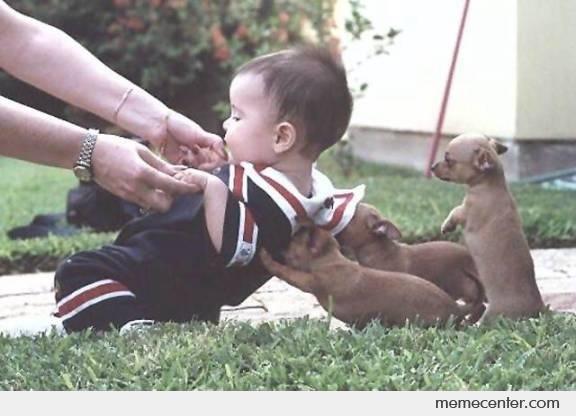
dont-worry-we-got-your-back_o_78426
Support each other like these puppies support this baby!

So yeah, even though it’s easy to get distracted by the big endgame, don’t forget the little things that get you there.  It might take longer than you want, but if you stop trying, you’ll definitely never get to where you want to end up.  Keep moving forward.  Keep supporting each other.  But most importantly, keep celebrating all the little steps as well as the leaps and bounds.

Writing Rituals

Howdy, howdy!  I know a lot of people who can sit down and write with little to no hoopla, but I also know a lot of others who have to perform a kind of ritual before they can get the words to flow.  I’m a little bit of both.  There are only a couple of things that I have to do before I can write, everything else is just procrastination (at least I’m honest).  But I thought I would share how my routine/ritual usually works.

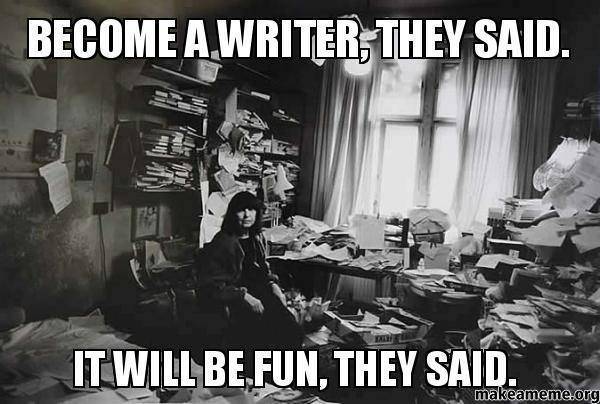
Become-a-Writer-They-Said-It-Will-Be-Fun-They-Said
It can be fun, but usually it’s a lot of hard work that gets tossed aside in favor of other hard work that flows better.

My routine starts with my morning (actually, it’s noon-ish, but I don’t know what else to call getting out of bed and getting dressed) ritual.  It takes about an hour and a half to finish because of the whole cripple thing.  I can’t just jump up, throw pants on, and be ready for the day.  That has to be done regardless of whether I write or not, so I don’t know if it really counts as part of the writing ritual or not.

Anyway, while Dad makes breakfast, I do all the little things that would normally draw my attention away from writing if I didn’t get them done.  I post on my social media and respond to any comments, I check my email and note who I need to write back when, I play a round of my mindless games, and I work on the crossword puzzle.  All of these things are just procrastination waiting to happen, so I try to get it out of the way before I eat (or right after if breakfast is a quick one).

procrastination-procrastination-everywhere
It really is, but you can work it into your routine if you try.

Breakfast is the only big thing that I have to do before writing.  It’s impossible for me to focus on anything productive if I’m hungry.  After food, I open the files I’ll need to get started on my work, do another quick social media and email check, set a timer for an hour, then start writing.  After the hour is up, I log my word count and do another round of short procrastination, then write for another hour.  I can usually meet my writing goal in two hours, but occasionally I’ll do a third.  I will say this: I can usually write even if I don’t break it up by hours if I have to, but I find it harder to concentrate that way.

49863083
Apparently there’s a Ryan Gosling meme for everything.  I don’t really know why.

I know, I know.  My writing rituals and routines aren’t all that interesting.  There’s little to no blood sacrifice going on (it constantly surprises me too).  But it’s how I usually work and it’s been good to me.  When I stop being (kind of) productive, I’ll try something new.  Maybe I’ll throw in a complicated chant or something to summon the muse.  All my stuff aside, what works for you?  Do you have a particular routine or ritual that gets you into the mood?

Which Came First: The Story Or The Character?

Hello, hello!  One of the questions that authors often get asked is whether the story or the character came first.  It’s basically the writer’s version of the chicken or the egg causality dilemma, but there’s no satisfying scientific explanation for it.  There are actually a lot of different answers depending on who you ask, and in my experience, the answer is usually a little different for each story as well as each writer.  It’s part of what makes writing unpredictable and fun.  Even if I fall into a writing rhythm (which I like because it makes the words come easier), the path getting there is always a tad different.

chicken-before-the-egg
I thought a writerly version was more appropriate than the other cartoons I found.

For me, I usually get a nagging voice in my head that turns into someone who wants to tell me their story.  The story is full of plotholes and vague connections and is nothing worthy of paper, but I can’t tell them that.  They also have a tendency to talk about other people like I should know who these people are (pretty sure we all know someone who talks like that).  Gradually, a cohesive story forms in my head and new voices pop up to fill in the holes.  If I haven’t started writing by this point, it goes into a list of ideas to work on after my current project is done.  That almost always quiets the voices enough that I can get my other work done.

MYT6q3IZiIlRS.gif
To everyone who assumes I know everyone you do.

I guess that means that my answer is that characters and stories have a tendency to come simultaneously to me.  Those are also usually the stories that are easiest for me to write down.  But I will say that I don’t need a fleshed out story to start as long as the voice in my head is strong enough.  I can’t work on a story when the characters aren’t there, so even though they might not technically come first, characters are the most important element to me.

Don’t get me wrong, though.  I do occasionally have a voice that pops into my head without a story to tell (they’re my favorites, but don’t tell the others).  These are the ones I talk to at night when I can’t sleep, so I learn so much more about them.  I tend to keep them around until I find a story to slip them into.  I also have a few plots and worlds that have built themselves with no solid characters to take the reins (but these are rare).  So, like I said, each story gets born a little differently for me.

tumblr_ncqfgjb0St1tp42tfo1_500
Just in case you were wondering about my sanity.

That’s how it usually works for me.  The story and character more often than not happen simultaneously, but not always.  What about you?  Do the voices in your head tell you their stories?  Maybe they just prefer to have random chats until you find homes for them.  Or perhaps the plot comes to you and demands you create people to act it out with.  Whatever your experience, feel free to share your thoughts or stories here or on my social media pages!

Form Rejections

Hello, hello!  Last Thursday, I sent out a few of the queries I was talking about in my last post.  Friday morning, I woke up to a form rejection from one of the companies that declare a no from one agent is a no from all of them.  They didn’t even take the time to personalize it with my name or the title of my “material,”  and the signature wasn’t from the agent I addressed my query to, but instead from an associate agent.  It had been sent at 8:04 in the morning.  I thought my first agent rejection would be devastating, that it would be so much harder to take than all of the other writerly rejections I’ve received.  I was wrong.  A form rejection that basic was pretty much the best first agent rejection I could have asked for.

rejected-kitty_orig
Cute animal memes help.

First, I suppose I should explain what a form rejection is for people who might not be sure.  It’s basically a vague letter turning you down.  Most of the ones I’ve gotten have an “it’s not you, it’s us” vibe.  They start with a firm no, usually followed up by explaining that your story doesn’t mesh with what they’re looking for, and ending with something along the lines of “feel free to submit to us in the future.”  Most of them are polite enough to include your name and the title of your story, at least in the realm of magazine/ezine rejections (not sure about agent rejections yet).

What do form rejections mean to me?  Honestly, they tend to be an indication that my story didn’t even make it out of the slush pile, that it probably didn’t even make it to human eyes (and I might be entirely wrong, but it’s what I like to think).  The places I submit to get hundreds of submissions a week.  There’s no way they can read each piece and give them the attention they deserve.  Slush readers weed through the ever-expanding piles and do their best to pick pieces the editors will enjoy or grab names that will bring in more readers.  I’m guessing a similar process occurs in the agencies.  I might not appreciate the whole process, but I understand it.  As writers, rejection is a part of the game and we can’t question each one we get.

elephant rejection
Okay, but only for a little while, then back to work.

So, yeah.  A barebones form rejection from an associate agent was exactly the kind of rejection I needed.  It doesn’t mean that Garnets and Guardians is unwanted trash.  It doesn’t reflect on my writing in any way.  It simply means the agency wasn’t hooked by my query, if they even read it at all.  And that’s okay.  I’m more worried about when the rejections get personal, because then I’ll know it’s my fault.  I might start getting really discouraged at that point.  Until then, I’ll just keep writing and submitting and collecting my rejections.  That’s all I can do.

49d9da07acf06ad615ae099ac4177a66
Don’t let the rejections get you down!

How do you feel about form rejections?  If they get you down, do you have any kind of ritual to help improve your mood again?  Feel free to share any thoughts, stories, questions, or whatever here or on my social media pages!
The Agent Search

Howdy, howdy!  How’s everyone’s spring (or autumn, depending on your hemisphere) going so far?  I’ve been wrapping up my winter by searching for agents and researching how to write queries and synopses.  In graduate school, they told us things like “make sure you have a finished, polished product (for fiction at least) before you query agents” and a few signs of questionable agents (ones who charge reading fees or want more than 15ish%, 20% at the most, etc.).  But nobody really explains how to find reputable agents or how to go about querying them.

5871545579642200752
When I first opened my browser to begin the research.

Google searches proved to be overwhelming at first.  They provided a plethora of information and no indication of where to begin, so I admit I panicked and sent a few emails out pleading for help.  That would be my first bit of advice: don’t be afraid to ask more experienced people for help.  Even if they can’t help you personally, chances are they know people who can.  While I waited for responses, I read through SFWA’s literary agents advice page, which is wonderful at telling you how to recognize questionable agents (it’s far more detailed than anything I learned in school).  I realize it’s a science fiction and fantasy group, but a lot of the advice here probably applies across the literary agent spectrum.  They also have pages about editors and publishers and other things that are super useful.

There are a number of publications (Writer’s Market comes to mind most readily) you can buy (some even come as Kindle books) or check out at the library that offer lists of current agents and agencies if you prefer more traditional research methods.  I didn’t want to spend money or visit the library this early in my searches, so I started at the Association of Authors’ Representatives website.  My only problem with this website is that it doesn’t group agents by agency, so it’s difficult to keep track of who works where which is really important since most agencies don’t want you to query more than one of their agents at a time (some agencies even say that a no from one of their agents is a no from all of them).  Then, someone sent me this post which groups science fiction and fantasy agents by agencies, and it gave me a solid starting point for my search (it was a life saver).  It’s a little old, though, so be sure to check out the agency websites and do your research as to who’s accepting what.

tumblr_mi1mkbm5OG1rqfhi2o1_250
There’s no magical way around the research.

That’s my second bit of advice: do your due diligence.  This is my baby that I’m about to shop around.  I’m going to make sure, to the best of my ability, that I’m not getting mixed up with someone who’s trying to take advantage of me and my work.  If you’re not sure how legit someone is, ask around.  Also, I’m making sure the agents are a good fit for me.  Don’t just randomly submit to people and hope it works out.  Go through their bios and websites to make sure they represent what you write and if they’re actually open to new clients.  And always check out the submission guidelines.  I look at it this way, if I’m wasting their time by submitting something they don’t represent or not following their guidelines, I’m wasting my time.

tumblr_o6cjf5iLad1tq4of6o1_500
Be wary!  We all have gut feelings.  Trust them if they say something is off.

Anyway, I’ve compiled a list of agents (I still have many more to look into).  I didn’t stop looking just because I found one who sounds like a perfect fit (she might not be interested in my story after all).  I will keep looking at different agents until I get ready to send out the first batch of queries (simultaneous submissions to different agencies are expected), then I’ll look for a new batch in case no one bites.  That’s all we can do.

Screen Vs. Paper

Hello, hello!  How is everyone’s March going?  Are we all ready for spring?  Personally, I’m definitely ready to sit outside and write or read.  The only problem with writing outside is that I use my computer (and its battery sucks), so I only get about two hours if I’m lucky before it has to be plugged back in.  Which brings me to today’s topic: screen vs. paper.  It’s a subjective topic.  Some people work better when typing and others feel more productive with a pen in their hand.  I’m kind of stuck in the middle on this one.

notebook-computer-writing-blogging
They both have benefits and drawbacks.

I tend to be a screen person.  Why?  Simply because it’s easier for me.  Whether I’m using my backscratcher to hit the keys or the on-screen keyboard, I can type much faster than I can write.  It’s not that I feel more productive (though technically I am) or creative when I’m on the computer, it’s just a matter of time management and the independence it gives me to work on whatever I want without having to worry about asking someone (namely Dad) for more paper or a different binder or whatever when I want to change projects.  For me, the computer makes life easier, so it’s what I use.

What most people don’t know is that I actually enjoy using a pen and paper.  I’ve always loved notebooks and journals and the like.  I used to have tons of them, but they mostly stayed empty.  It takes me twice as long as the slowest writer you know to even sign my name.  The paper has to be placed a certain way.  Sometimes, I have to write upside down.  I can’t move my arms much, so even something as simple as writing by hand becomes a big production.  But still, I like the feel of a pen in hand and my hand coming away covered in ink or graphite from rubbing across the page (left-handed people will understand).  Plus, I like being able to doodle in the margins when I’m stuck on something.

7
The struggle is real.

So, like I said, I’m stuck in the middle.  I love the idea of writing by hand, but it’s not a feasible every day thing for me, so I usually go with typing.  I can definitely see where some people might have trouble focusing on a computer (that Internet button is so damn alluring).  I can also understand why some people find paper to be impractical (there’s just no easy way to erase a sentence and add a paragraph in its place without making a seeming mess of the paper).  I guess I’m lucky that I can enjoy working both ways, even if I mainly stick to the screen.

squirrel of judgment
The lure of the Interwebz has its downsides: judgmental squirrels.

I guess it’s all about finding what works for you.  Are you a screen or paper person?  This question isn’t limited to writers.  Even artists have the option of working on the computer or in more traditional mediums.  So, what do you prefer?  Or maybe you like using both in your process.  As always, feel free to share your thoughts here or on my social media sites!

Until next time!

Being Organized: Overrated Or No?


Howdy, howdy!  I was recently going through my manuscripts and free writes when I realized that I’m totally unorganized.  It’s all jammed into the same folder on my laptop, except for my main project (that gets its own folder with subfolders and the whole nine yards).  This is really unusual for me.  I don’t like having to scroll through a bunch of stuff to find what I want, let alone having to open multiple files to find the correct version.  That’s just not me.  Yet here I am, sifting through a mess.  It’s weird and uncomfortable, but for some reason, I kind of like it.

1516651974-funny-quote-about-organized-people
I really am.

Walking into my room, you might not think I’m as organized as I actually like to be.  My desk is a complete mess.  My CDs are no longer alphabetized by band, then chronologically by release date.  There’s no real rhyme or reason to my closets/drawers.  Why?  Because I can’t organize everything myself.  I know my Dad would sit down and organize everything if I asked him to, but I’m not going to waste his time with my quirks.  I know basically where everything is, so I’m not too worried about it.  My computer, however, has folders with subfolders arranged by whatever works.  I’ve gotten a little lax when it comes to organizing my pictures, I admit, but everything else has its own little place.  Usually.  My manuscripts turned out to be a mess I didn’t realize was piling up.

I was looking for a specific story, but I couldn’t remember what I called it and whether it was in its own document or bundled together in one of my free write documents.  I ended up going through three different folders (because apparently I wrote it as an undergrad and never moved it into the current manuscripts folder).  Normally, this would frustrate me to no end.  But I ended up finding a bunch of incomplete ideas that I had totally forgotten about.  Apparently, I have a lot more ideas for novels and short stories than I realized.  A lot of it was useless and stupid, but there were some gems hidden in the muck.

4533bccd-ac5f-4a0b-9398-a3667d4362f7
Weirdly true.

I can admit that it was fun taking the time to look through files I wouldn’t have otherwise given a second glance.  Being super organized means you’re occasionally going to overlook the small stuff.  Most of the time, I’m okay with that.  But I think I might just leave my manuscript folder a little messy.  That way, I’ll be able to take the time to look at those mystery documents once in a while.  But I’m definitely going to take a day or two to get my pictures back in order.  I’m not ready to let loose that much.

5PBD6Pj.gif
A messy folder is the equivalent of letting my hair down, but keeping it tightly braided.

So, I guess I’m trying to say that I can see the benefits of being a little disorganized.  I probably won’t ever be the type of person who’s comfortable not knowing where everything is, but I can deal with it.  What about you?  Are you super organized or do you like disorder?