Guest Post: Raising a Novel – Writing and Marketing in Today’s Publishing Climate

Hello, hello!  Welcome to another guest post.  Today we welcome my friend and fellow Odd Stones Alliance member (the writing group we’re in), David Simms.  Between parenting, playing in a band, teaching, and many other awesome things, he’s managed to complete and publish his second novel.  Here, he shares some of his experience with the whole process from writing to publishing to marketing.  Read on!
41257910_306174870114957_8174151632846585856_n

Raising a Novel – Writing and Marketing in Today’s Publishing Climate

The birth of a novel in 2018 is a vastly different experience than it was just ten years ago. It begs the question, when you spend years toiling over your story and nobody cares, or reads it, does it count? With the market today, too many authors take the route of simply dropping the book into a forest where nobody will see it, hear it, read it, or know about it. The gestation and birth is easy – barely anyone teaches writers how to raise the damn thing. When I embarked on the adventure to pen my second novel, Fear The Reaper (Crossroad Press), I knew it would be a different experience. My first novel was a blast to write. Sure, it was painful at times, but the writing was pure bliss. The research was 90% imagination and the rest drew from experience.

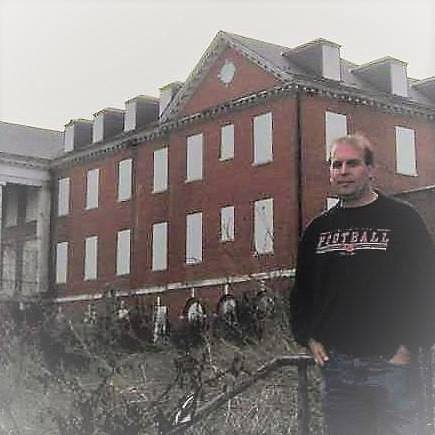
This time, I decided to take on the behemoth of a mental hospital down the hill from my new house. After learning its dark history and discovering that no other writer had ever published a novel on this topic, I dove in headfirst and cracked my skull on the task of writing a historical thriller. A true historical fiction piece scared me bad enough, but wrapping one of America’s darkest, dirtiest secrets around a fast paced story sounded much more enticing. After poring through several nonfiction texts, studying the town’s historical society while fending off dusty spiders, and interviewing former doctors, nurses, and relatives of patients, I had my story.

Writing the beast of the novel felt like bliss. Getting every detail of clothing, cars, food, drink, and sports team correct felt just right. By the time I hit the finish line, 109 thousand words glared back at me, daring me to edit them. No problem. It took several months, but editing it happened. Mostly, it was a pain-free experience.

41337673_477620426092490_3548016713075261440_n

Postpartum (a term meant sarcastically, as I’d never be able to handle that experience), the book sat in my hands and I realized that books need to be raised, like petulant children. In this literary age where it seems a million books are published every week, writers must become warriors to get anyone to read it. Unless he/she is blessed to be with paired with a god/goddess of a publicist with endless funds, the writer must go ballistic and strategic if success is going to hit.

Without an agent or army, I hit the trenches alone and launched the second career of an author – the marketing. This is just as time-consuming as writing, yet without the fun. Thankfully, I’ve met and/or befriended many of my favorite writers, which helps networking – tremendously. Most of this has occurred because of the band I’ve played for. Follow that up with reviewing for four high profile venues and even more doors open. When it came time to secure blurbs for Fear The Reaper, I reached out and nailed down four out of six quotes. That’s better than most newer writers but it happened solely because of connections, not because I’m an amazing writer (I’m not).

My advice here: bite the bullet and social anxiety. Go to cons. Friend fellow authors on Facebook. Talk to them. Ask them for advice – most of them will happily oblige.

The second round hit harder. With a million books out there multiplying like germs in the Oval Office, how could I get my novel to stand out? My publisher is great but doesn’t do much marketing, which is normal (wish I would’ve know that earlier). So I reached out to people who know marketing best. Surprisingly, some self-pubbed authors really nail this aspect of the career. “Run a Facebook ad,” said one. So I did, and it sucked. Then I ran another but was bright enough to share it with a few who had much more experience with it. When I began receiving comments from across the globe, I knew it worked. Leading with one of the blurbs from a NYT best-seller obviously helped. Comparing my book to others (Shutter Island crossed with The Firm with a touch of The Shining – not my words) drew in even more readers.

Does this mean I’ve sold a ton of books? No, but it does mean I’m free from eating cat food for a few months.

I noticed that several of my “successful” writer friends kept posting news of their book tours, multiple signings, and interviews (online, radio, television).  How does one accomplish this on a budget, I pondered. An extreme, teacher budget. Some suggested a publicist. Sure. Once I learned that most of them only asked for my first born and random organs, I decided not to go into deep debt. Upon further investigation, I discovered that much what they offered wasn’t substantially different than I could accomplish on my own. I asked about television. They countered with radio. Does anyone still listen to talk radio anymore? If so, how many would purchase a novel after hearing an interview? Not many.

Yet the other avenues still appealed and seemed within grabbing distance. I sent out swarms of press releases to newspapers, television stations, colleges, libraries, bookstores, and that creepy guy who stands on the corner downtown. Even he ignored my requests. For a book of this importance (the subject, not my writing), one might think there would be interest, especially since it was a local book tackling a horrible part of history that most aren’t aware of. After so many cold shoulders, the offers did trickle in – at glacier speed. But still, I persisted. 

Five interviews later, most reaching across the world, I’m pleased. An invite to a black tie event where I’ll be paid? Sure. A dual signing with an author from California in NYC and DC? Definitely. Selling books by the side of the road before my ghost tours? Awesome.

It seems that there’s a course for just about everything in writing, except for how to actually get people to notice that your book is alive and out there in the wild. The ones that are in existence, that are legit, are harder to find than a unicorn riding a leprechaun. Maybe that should change. For those of us who spill blood on the pages for years to conceive these extensions of our souls, getting the world to notice them would be pretty nice.

But it’s possible. I’m proof of that. Keep reaching out in the dark. Eventually, you’ll find something. Hopefully, it doesn’t bite.
41267199_1293578027443036_1395113142765223936_n

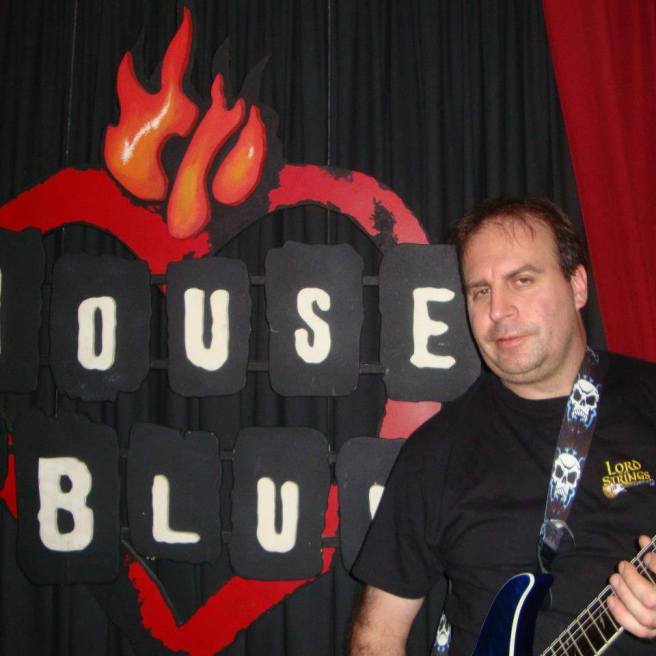
Bio: David Simms lives in the Shenandoah Valley of Virginia with his wife, son and trio of furballs after escaping New Jersey and Massachusetts. A special education teacher, college English instructor, counselor, music therapist, ghost tour guide, and book reviewer, he moonlights in the Slushpile band on lead guitar after co-founding the Killer Thriller Band with several best-selling authors. He gives workshops in three states on using music to help students of all ages to learn and de-stress, getting teens to write, and combating burnout for teachers in schools. He has sold several short stories which have been published in various anthologies, such as TERRIBLE BEAUTY, TRAPS!, and DARKNESS RISING and academic publications on music therapy, creative writing for teens. DARK MUSE was his first novel, a YA musical dark fantasy. FEAR THE REAPER is a thriller that’s mostly true story about the eugenics movement in America – basically, how we directly influenced Hitler and began a truckload of horrors right here in the states.

New Draft, New File

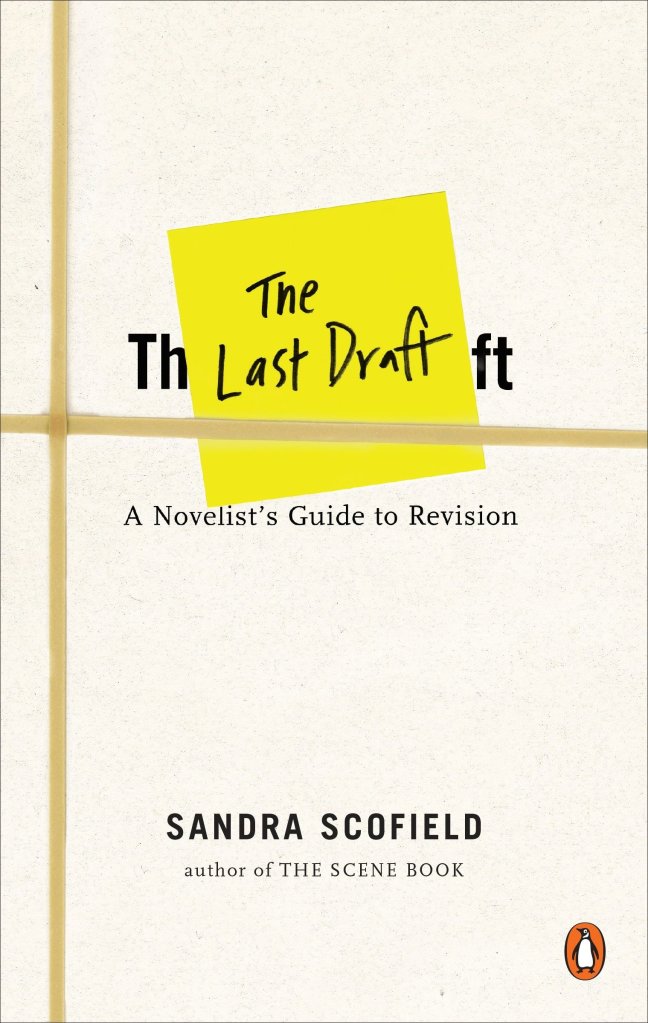
Howdy, howdy!  Another week gone by in the blink of an eye.  It seems like the only way I can keep up with the days is by the difficulty of the crossword, and that’s not a reliable measure.  Maybe I’m just being over-dramatic.  Anyway, this week, I wanted to talk about another new-to-me revision technique that I’ve been trying.  It’s another suggestion from the same book I mentioned last week, The Last Draft by Sandra Scofield.  Basically, you type up the new draft in a blank file.

WellinformedGloriousBedlingtonterrier-size_restricted
Yes, get into it.

In pre-word processor days, writers had to type up each new draft with their trusty typewriter (or write them out by hand if you want to go back that far).  There was no copying and pasting.  No saving the source file under a new name and making changes in the text you’ve already written.  Sure, they had the hardcopy next to them, but still… it sounds like a long and tedious process.  But it’s worth a shot when you’re having trouble getting into the revision flow.

I’ll be honest and say that I haven’t followed Scofield’s advice as thoroughly as I could.  She suggests printing two copies your first draft and doing a bunch of exercises and making notes on the hardcopies and all of that, then revising into a new document from there.  That’s too much work for me.  I’m not being lazy, just mobility-impaired.  Why struggle with shuffling a bunch of papers around when I can use track changes in Word to make notes and achieve similar results?  Technology makes my life easier and more independent, so I try to make use of it when I can.  If I get stuck in the revision process, then I’ll back up and try it another way.

download (1)
That’s when we try something new.  Also, panda butt!

However, I did decide to follow her advice about typing the new draft up from scratch.  I open the first draft, highlight the next 1,000ish words (because it gives me a visual of how much I want to get through that day), then open my current draft file and get to typing.  Even though I was skeptical at first, it has been super helpful.  It allows me to focus on the voice of the narrator, which was shaky early in the first draft, and to fix things in my head as I type up the new version.  I’ve added stuff and taken stuff away.  I play with paragraph breaks and punctuation.  It just feels more acceptable to change things around on a blank page than it does on a completed draft.  I’m not disrespecting what I’ve already written, I’m making it better.   Even the stuff that I’ve sworn I was going to type up verbatim ended up getting tweaked to fit the new flow.  It’s been a freeing experience.

anime-book-writing-girl-wallpaper-walls
Okay, it’s not as cool of an experience as this, but it’s pretty close.

I, personally, like starting at the beginning and working through things paragraph by paragraph.  But even if you like to jump around and work on different scenes in different orders, typing everything up in a new file could be helpful.  I know people who write their first drafts by hand and type their second draft from that.  There are so many ways to do this whole writing thing.  I’m constantly tweaking my own method, in case you haven’t noticed.  So, if you’re stuck or just haven’t found a way that consistently works for you, don’t be afraid to try a new process.

As always, feel free to share your own methods, comments, or questions here or on my social media pages!

Making Timelines

Howdy, howdy!  How is everyone’s August going?  I’m still on track with the goals I posted last week.  Writing and revision are slow, but I’m doing something every day.  As far as books go, I’m currently reading Sandra Scofield’s The Last Draft: A Novelist’s Guide to Revision.  I’m not entirely sure how I feel about it as a craft book.  It’s not bad, but half the time she seems really into genre fiction and the other half it seems like she’s looking down on it.  I’m just getting mixed messages from it.  However, I have found many of the exercises in the book useful!  I wanted to talk about one of those today: making timelines.

91JVoRWVrtL
It’s not bad as far as craft books go.  I’d recommend trying it.

In all of the fiction writing classes I’ve taken, there’s always been at least one hardcore plotter (sometimes, it’s even the teacher).  These are the people who swear by creating outlines and timelines of every little thing before they even begin writing.  I’m not one of them.  Sure, I plot things out in my head, but writing it down feels constrictive.  I like to let my first drafts form organically.  There’s no theme in my mind, no worry about subplots, none of that.  I know point A and point B.  Getting from one to the other should be an adventure.  That’s just how I like it.

I admit that my approach makes revision difficult.  I have nothing but the manuscript to work with, so trying to rework it into something readable can be a daunting task.  That’s why, when someone in my writing group suggested the above-mentioned book, I decided to give it a shot.  And you know what?  It offered suggestions that I had never thought about before.  Did you know that you could write your first draft with no guidelines and then make timelines and outlines and all of that plotter stuff after you have that shitty draft finished?  Because I had never really thought about it.  And now I feel like a complete idiot for not thinking of it sooner.

tumblr_n51kiaVPqc1smcbm7o1_250.gif
Me. Stupid face and all.

So, guess what I did!  I bought a bunch of sticky notes and wrote out the main plotline, filling in stuff and taking stuff away as needed.  In other colors, I took certain characters/groups of characters and wrote out what they were doing and important tidbits that needed to show up in the novel.  Dad stuck them up all over my mirrors and now they taunt me every day until I do my work.  I can’t say I did it correctly.  I didn’t give each little plot point its own Post-It (only the major ones got that honor).  I’m sure I could’ve used different colored pens for different plots and all that crap.  But for my first time, I’m happy with it and it’s working for me so far.

kinopoisk.ru
Why?  Why is this so true?  Timelines as well.  So hard.

I guess what I’m trying to say is that just because you’re not a plotter doesn’t mean you can’t try their techniques during the revision process.  The book offers a lot of different suggestions, some of which I skipped in favor of others.  I’ll read about the ones that I know don’t work for me, but it doesn’t mean I have to do them.  If you’re having trouble finding a toehold in the revision process, pick up a craft book and try something new.  Make timelines.  Use sticky notes or index cards.  Have fun.  See what kind of pretty pictures your story makes.  Or keep it simple like I did.  Whatever works for you.

Speaking of things that work for you (or don’t), how do you go about revision?  Do you make timelines before or after the first draft or not at all?  Feel free to share your thoughts, comments, and techniques here or on my social media pages!

August Goals!

Howdy, howdy!  Can you believe it’s already August?  I feel like I’m still stuck in June.  Time just keeps getting faster and faster.  Am I alone in this feeling?  Yeah?  Well, okay then.  I don’t really have much to talk about at the moment, though I am trying my hand at some revision techniques that are new to me.  If they work out, I’ll probably talk about them more next week.  Anyway, since this Wednesday actually falls on the first, I decided to simply share my August goals with you.

original
It’s a pretty picture.  That’s all.

So, without further ado and in no particular order, I present to you…

August Goals:

1. Submit stuff 8 times (2 every Monday) to semi-pro markets or higher.  This is one of my goals for the year (submitting two stories to magazines or anthologies every Monday) and I’ve been doing really well with it.  I haven’t missed a week yet, though I do believe I submitted stuff on Tuesday a couple of times.  Sometimes, I’ve dreaded submitting or felt like I’ve submitted everywhere I possibly could, but I pushed through it and found new places anyway.  Hopefully, I’ll be able to keep it up!

2. Write 50+ words OR revise 1+ pages EVERY DAY.  I’m back to the small goals every single day thing.  It’s just really helpful to me when I feel like I’m between projects.  In my head, I know I’m prepping for in-depth revisions on LR, but if I don’t keep track of words or pages, I don’t feel productive.  This goal might change once I find my rhythm with LR.  For now, though, it’s good for me.

large
George R. R. Martin

3. Read 2 books.  This is another one of my goals for every month this year.  Honestly, I’ve kind of lost track of how many books I tend to read in a month because some overlap months and others I deliberately read over a longer period of time (almost always craft books).  But I do know I’m up to 18 books this year (thanks to GoodReads tracking feature), so I’m ahead of schedule.

4. Make time for people.  I’ve been a bit reclusive recently, though I still try to answer every message I get.  I just don’t initiate as many conversations as I should.  This is nothing new.  It’s something I struggle with all the time (as you know if you’ve read earlier posts).  I’m just far too comfortable not talking to people and stalking them on Facebook instead.  Yes, I’m creepy like that.  My friends know this and many of them do the same.  But I really do want to be better about socializing.  I swear.

5. Finish timeline for LR.  This is one of those new-to-me techniques I mentioned earlier.  There’s about one more day’s worth of plotting before I have a timeline that I can work with (I’m plotting it on the computer before I write anything out).  I even bought a bunch of Post-It notes in pretty colors to make everything easy to differentiate.  I just have to figure out where to stick them that’s easy to see.  Then, I have to recruit Dad to do the sticking.  I bet he never thought my novel writing would include work for him.

Habitación-de-los-post-it-destacada-600x600
That’s a lot of Post-It notes.

6. Work on revisions of LR.  Hopefully the timeline will make revisions go more smoothly than usual.  It’s already given me ideas for new scenes and how to rework some old ones, so I’m cautiously optimistic.  I should have some updates on this in the next couple of weeks.  Wish me luck!

Those are my goals for the month.  What about you?  What are you hoping to accomplish before September?  Feel free to share your goals or thoughts here or on my social media pages!

Revision Prep: The Initial Read-Through

Howdy, howdy!  I recently started the initial read-through of LR (code name for novel attempt 2, draft 1) in preparation for beginning the editing process.  Yes, I know I should’ve done that a couple of months ago, but I didn’t.  So, here we are.  This is the part of revision where I haven’t looked at the story in a while (about six months for this one), so I’m reading it mostly in reader mode.  I have to remind myself that this is not the time for my inner editor to nag at every little thing, it’s time to just enjoy the story and see how it goes.  However, there are things I keep on the look out for in the back of my mind while I’m reading.  That’s what I want to ramble about today: the five things I look for during this read-through.

Slide2
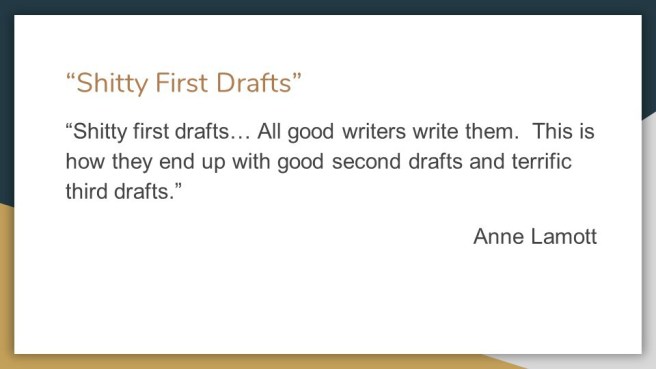
The sooner I acknowledge it’s shitty, the easier it is to tune out my inner editor until I need her.

1. Gut reactions.  What makes me laugh?  What makes me want to cry?  What do I glance over?  I’m looking to see what parts of the story elicit emotional reactions and which parts are blah.  I want to keep the former (if possible) and tweak or get rid of the latter.  Also, I want to know if I still enjoy the story as much as I did when I wrote it.  I’m only like six chapters into LR as a reader, but I’m actually super surprised at how much I love it.  Yeah, it’s a shitty first draft, but the characters and story still really amuse me.  It makes me think I’m doing something wrong, because I feel like I’m supposed to hate it at this point.

2. Continuity errors.  Have I randomly changed someone’s name?  Did I move an entire building somewhere else halfway through?  Was someone right handed and suddenly they’re left handed?  Stupid things like that.  Some are glaringly obvious while others will only be noticed by a really close reading.  I already know my main character randomly goes from fourteen to seventeen (because fourteen was too creepily young for this particular story).  One of my “bad guys” changes her race halfway through because I originally couldn’t decide what group of shifters she belonged to, but then decided on one that was completely different from how I imagined her in the beginning.  And of course there are a bunch of little things as well.

plot-holes-plot-holes-everywhere
I feel like I’ve used this before, but it’s appropriate.

3. Plot holes.  Have I left any threads undone?  Did I randomly start something in the middle with no lead up to it?  Is what the character’s doing feasible in the world I created?  Is it something they actually would do?  These are definitely things I have to make notes about so I can fix them or change them or remove them entirely.  There’s this thing with a fox in the first chapter of LR and by chapter two, it’s been completely forgotten.  I have no idea where that was going, but if I don’t figure it out by the end of this read-through, I either need to cut it or make something up.  These are important changes for me to consider as I read.

4. Useless characters.  Do I have any characters who are just there to do one thing and then they disappear?  Can someone more pertinent to the story do the thing?  Could that character become someone important?  I know most books have at least a couple of superfluous characters, but I like to weed them out if I can.  In LR, there’s the principal’s secretary whose sole job seems to be giving my main character his late slips for class.  I’m debating whether or not to combine her with another character or just giving her a bigger role in the next book.  Then again, I might keep her as she is because that’s life.  Someone has to pass out the tardy slips.

Lucifer1
Went looking for typo demon pictures and got distracted by manga demons.  It’s Lucifer from Kaori Yuki’s Angel Sanctuary.

5. Blatant typos and grammatical errors.  These aren’t things I actually look for in this read-through, but if they pop out at me, I either make a note or fix them.  I try to save this stuff for later read-throughs, though.

What about you?  Do you have anything you look for when you’re getting reacquainted with stories you want to revise?  Feel free to share your thoughts and comments here or on my social media pages!

Types of Real Life People I Kill Off in Stories

Howdy, howdy!  I’d like to take a second to thank Joseph Carro once more for his super helpful guest post last week.  I hope everyone enjoyed it.  And now, for today’s post, I want to talk about some of the different types of people who make their way into my stories.  I’ve actually been a little aggravated lately (I try not to be easily annoyed, but it happens).  So, the different types of people I’m planning to talk about are usually the ones who die in my books and stories.  Painfully.  But don’t worry.  It’s just a cathartic type thing.  I’m not a sociopath.  I promise.

71UK03Jv9HL._SX425_
See?  It’s on a mug.  I’m not the only writer who does it.

Type the first: people who flake on me.  These include, but are not limited to, the people who make plans then “forget” even though you talked to them that morning, the salespeople who make appointments with you then call two hours before they’re supposed to meet you to reschedule because of “conflicts,” and the people who offer to do you a favor then ghost you for six months in the hopes you’ll forget instead of just saying “hey, I can’t follow through, sorry.”  I know, in the grand scheme of things, none of this is really important, but it’s still super annoying.  And I will smile and pretend it doesn’t bother me, but rest assured… I’ve killed far too many people (some multiple times) for doing this stuff.

Type the second: people who insist on treating me like I’m mentally challenged (or whatever the proper terminology is today).  I admit, after it’s pointed out that I’m perfectly capable of thinking and speaking for myself, most people treat me like a human being.  But there’s always that one waiter/waitress who tries to walk away without taking my dinner order despite the fact that I ordered my drink perfectly well five minutes before that.  I even had a professor in my community college who would always act super surprised when I answered his questions correctly even though he didn’t act that way with everyone else.  To be fair, he was a nice guy and I loved his class, but it was a little annoying.  It always is when people underestimate your intelligence.  I don’t kill off this type of person very often, but sometimes it just builds up and I have to release my aggravation somehow.

CBR9_7_AgainReallySupernatural.gif
This face applies to everything here.

Type the third: people who assume I have no life.  These are the ones who call up or text and want to make plans for that afternoon/night.  It’s not so much my friends who annoy me with this crap as it is companies.  And it’s always medical supply companies.  In the past couple of weeks, we’ve gotten two calls from people wanting to come out that afternoon or the next morning.  I don’t wake up until the afternoon.  And it’s a little insulting when they act like I should be home waiting for them.  I have a life.  Okay, I’m usually at home, but that doesn’t mean I’m not busy.  Don’t just assume I’ll be here unless you make an appointment a few days in advance.  And then, don’t flake on me.  If you do multiple annoying things, torture will precede your death.

dont-invite-me-anywhere-last-minute-i-enjoy-doing-nothing-3974635
The Interwebz gets me.

I think that’s enough ranting about the types of people who die in my writing.  Of course, there are many other categories, but these are the ones that spring readily to mind when I think about this stuff.  What about you?  Do you use death in your work as a way to deal with people who annoy you?  What types of people make it into your work most often?  Feel free to share your thoughts or comments here or on my social media pages!

Guest Post: Joseph Carro On Writer’s Block

Howdy, howdy!  Welcome to another guest post.  This time, we have my friend and fellow Stonecoast alum, Joseph Carro.  He’s got some super helpful tips for working around writer’s block, which I struggle with a lot.  So, read on!

106
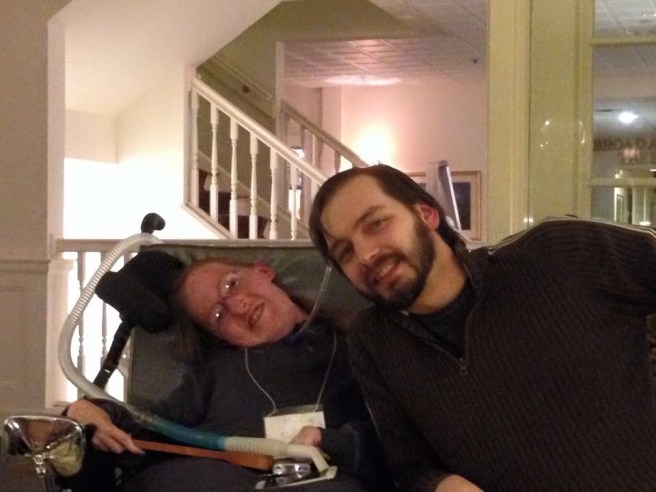
Joe and I at the Harraseeket Inn.  Pretty sure that was January ’15.

On Writer’s Block

By Joseph Carro

Writing can be an extremely frustrating and hopelessly solitary artistic endeavor, and as writers we know and understand this when we choose it as our lifestyle. Yet it doesn’t make it any easier when we’re holed up in the basement, writing the next big thing on our minds. Whether you’re trying to write a blog post, a poem, a screenplay, or a novel – Writer’s Block afflicts us all. I know that personally, real life usually gets in the way and saps my creative juices with its constant demands, but to keep writing I have acquired several techniques which I use in order to get my brain jumpstarted again. My hope is to share a couple of my own techniques with you. I know that many of you have your own techniques, but as a writer – I usually appreciate any new ways in which I can defeat this annoying affliction. Feel free to chime in with your own methods below in the comments section.


WALK OR DRIVE: Walking, to me, is a lost pastime. And I’m not the only one to think so. If you’re stuck on a certain spot in your manuscript or post or what have you, get OUT of that space for a little while. If you don’t like walking, then just sit outside or maybe take a drive. Anything to get yourself out of your stagnant state. Maybe you’ll see or experience something that will ignite that spark. You just have to step outside your comfort zone for a bit. Fresh air does wonders for the mind and the thought process needed for writing.

giphy (8)

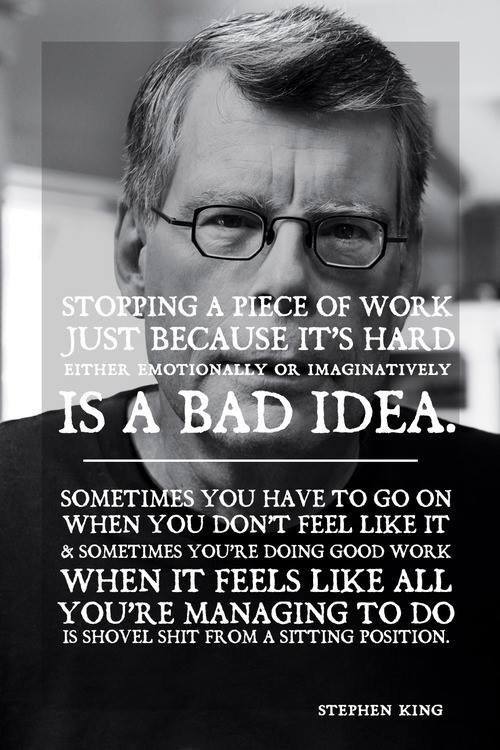
READ SOMETHING: As Stephen King once said; “If you don’t have time to read, you don’t have the time (or the tools) to write. Simple as that.” Writing is a skill in which you absorb technique and inspiration from reading other writers. To do so, you need to actually read. Sometimes, reading someone else’s work is the perfect way to jumpstart your own. In my case, I will sometimes put aside my writing for one day and try to finish the book I was already reading or start another one. By the time I’m through a few chapters, I’m usually chomping at the bit to get back into my writing project. Obviously, it’s “dangerous” to put aside the writing to do something else (because you can get too much into the habit of doing that), but in moderation I think it works. Just really pay attention to what the authors are doing; their prose, the construction of the novel or short story or poem or whatever, and the way in which the strongest parts of it make you feel as a reader. Try to infuse your writing with some of that magic, without trying to ape their style. Be you.

094

LISTEN TO MUSIC: This one is very divisive within the writing community. In one camp, you have people who absolutely cannot listen to music while writing. Or, they at least must listen to very quiet, ambient music rather than anything heady with lyrics. That’s okay, this technique may not be for you either. However – when I’m trying to write a certain scene or a certain tone to my short story or screenplay, I sometimes pick an appropriate piece of music. For a tone, I will generally choose a playlist I’ve created on Spotify or find a playlist on YouTube – for example, if I’m looking for a melancholy tone I will choose a playlist that’s labeled as “sad songs” or “bittersweet songs”. Generally, the mood conveyed through these songs, and the emotions they bring out enhance my writing. It’s all about knowing your tolerance for this kind of distraction while you’re trying to write. This also works if you just need to listen to a song or two BEFORE you write, rather than listening to entire tracks during your actual writing. Just make sure to fire up another song here and there to renew your creative juices and emotions, because sometimes sitting in a chair and writing prose does not automatically generate emotions until you really get into the meat of the story. Writing is both a technical skill and an art, and art comes from emotion. Sometimes, we wade too far into the technical aspects and lose the emotional momentum.

where_words_fail_music_speaks_art_print-r5a683fbc46c54ffe83e696870a409b8e_zv9_8byvr_307

USE WRITING EXERCISES AND PROMPTS: This method is actually my favorite, and thanks to the internet, there are countless online sources for finding writing ideas. These aren’t necessarily meant to replace the project you’re working on, but are more for trying to write something in general when you’re stuck. However, if you need some distance from your novel, it’s okay to take a brief respite and write something else. A few of my favorite sources for writing prompts are from books I’ve found or have been given. My wife gifted me a sort of “activity book” called 400 Writing Prompts by Piccadilly Inc and that one has given me quite a few ideas. A couple of other books I’ve found to be pretty useful are The Writer’s Book of Matches: 1,001 Prompts To Ignite Your Fiction from Writer’s Digest Books, What If?: Writing Exercises for Fiction Writers by Anne Bernays and Pamela Painter, and The Pocket Muse: Ideas & Inspirations for Writing by Monica Wood. There are also lots of online sources out there as I mentioned above, and some of my favorites are Writer’s Digest, Poets & Writers, tumblr, and even reddit. Various bloggers like myself also dedicate entire sections of their blog to writing prompts. My own blog, Away With Words, has just such a section that you can find HERE. I try to do at least one weekly prompt, but sometimes I do more.

13055369_10154016166591291_2581038575776862019_n


These are just some tools for trying to get back into the swing of things, and my hope is that by using these techniques and resources, you can dig yourself out of whatever funk you’re in and get back to writing. Remember – try not to be too hard on yourself. Writing is hard work, it’s thirsty work, and your brain can quickly become parched when it’s dealing with the same tedious task over and over. Give it some variety and keep yourself from getting mired. Good luck!

406072_10150922800201931_1610089937_n

My name is Joseph Carro, and I am a Maine-based freelance writer and editor trying to make it in the big world of letters and semi-colons. I work currently as a barista to (barely) pay the bills, and in the meantime, I’m working on a YA novel, currently untitled, as well as various other works like screenplays, comic scripts, short stories, and flash fiction. Heck, you may as well toss in some comic books with that, too.

I live in Portland, here in Maine – with my beautiful wife and our five-pound chihuahua, Brewtus.

Above photo courtesy of Helen Peppe.

May Is Here!

Howdy, howdy!  Apparently, May decided to arrive when I wasn’t looking.  I don’t really have anything worth talking about this week (feel free to send me suggestions for topics), so I’ve decided to make my goals for the month public again.  Motivation has been really hard to find lately.  I have no idea why.  But, hopefully this will help!

cc41ac16d8e8143edc6116ddcc9eb46b
Because Snoopy and Woodstock!

Here are my May goals, in no particular order:

1. Submit stuff 8 times (2 every Monday).  This is the one goal that I haven’t failed at yet this year.  I’ve gotten a bunch of rejections.  One of my stories has been shortlisted, so I’ve got my fingers crossed for that one.  And I have a bunch still floating in the slush pile limbo.  Hopefully, I can keep up the submissions this month!

2. Write 1 flash piece OR short story.  I’m super behind on this one.  So far this year, I’ve only written one short story and revised a couple of flash pieces.  I was hoping to have at least three new pieces to shop around by this point, but I don’t.  Soon, though.  I hope.

3. Read 2 books.  I’m currently reading an ARC of The Oddling Prince by Nancy Springer to review this month.  The book club I’m in will be reading The Wicked Deep by Shea Earnshaw, so I’ll probably also read that.  If I have time, I also want to read the third book in the Howl’s Moving Castle trilogy, but I don’t know if I will or not.

35297394
It looks pretty interesting!

4. Make time for people.  My recluse skills have been on point lately.  I avoid chatting on Facebook.  I only text one person regularly.  Can’t remember the last time I talked to someone on the phone.  And I really shouldn’t be that way.  I should randomly message people and try to make new friends.  The problem is, I’m comfortable not bothering people.  That’s a hard habit to break.  I’m trying, though.  I sent a few messages out yesterday.  I’ll try to send out a few each week.  We’ll see how it goes.

5. Finish revising short story.  I’m still working on fleshing out and revising the short story I wrote a couple of months ago.  It’s a bit more sci-fi than I’m comfortable writing, but I’m enjoying it.  I actually took a character from a novel I haven’t finished and threw her in a new world as a younger version of herself.  I think this world might be the key to all the problems that made me quit that novel.  But that’ll have to wait until I finish everything else I want to do this year.  For now, the short story comes first.

6. Submit story to critique group.  It’s been a while since I’ve submitted anything to my critique group, so hopefully some of them will be up to checking the story out when I finish revising it.

7. Begin revisions on LR.  I decided to go back to the second novel attempt and work on revising it first.  I miss my dragons and shifters and everyone else in that book.  It’ll be nice to get back to them.

d2738480aa3b3d960f3041110f72287c
A pretty sea dragon by Carlos Herrera.

Those are my goals for the month!  What about you?  Feel free to share your goals here or on my social media pages!

The Revision Struggles Begin…

Hello, hello!  It finally happened.  On Saturday, I wrote THE END on the shitty first draft of novel attempt number three!  Yay!!!  I celebrated by doing nothing productive whatsoever on Sunday.  Monday, I slowly dipped my toe into the revision pool by revising a micro fiction piece before sending it and another piece out into slush land.  Which brings us to today (because I’m writing this on Tuesday).  Now, the real revision struggle begins.  Sure, I have a short story that needs to be doubled in length and smoothed out.  That’s my immediate focus.  But then, I have to decide which novel attempt to revise, two or three.  And that’s what I plan on rambling about today.

Make Good Choices
I try.

Option 1: revise novel attempt two (LR from here on out).  In my head, I know this would be the smart choice.  For one thing, it would give me a break from the one I just finished, which is always encouraged so that when it comes time to trim the fat away, you won’t be blindly attached to it.  I’ve had more than enough time away from LR to be able to make the hard cuts.  I’m still super excited about LR, so that’s a plus.  And I really do miss being around those characters.

The downside of revising LR first: while I love it, I’m not really sure it has much potential in the way of attracting agents.  Are dragons even “in” anymore?  Or are they passé?  I know I shouldn’t worry about stuff like that, and I should work on whatever my heart tells me to, but it’s something I think about.  I’ll have to do some research on the trends right now/where the trends seem to be headed.  Plus, I’m concerned that if I get caught up in LR’s world, I’ll lose steam in the other one.

Toothless
Don’t worry, Toothless.  You’ll always be cool.

Option 2: revise novel attempt three (DS from here on out).  Some of the advantages include that the plot is fresh in my mind and I still remember what all my little revision notes mean.  From that perspective, it makes sense to dive right back into DS.  It’s also a genre that’s always in high demand, but with a supernatural twist.  So, I feel like it has a better chance of catching an agent’s eye.  Plus, I’m completely in love with these characters and their stories.

The problem with starting with DS is that I wouldn’t have much time away from it, so I would probably still be super attached to all the fluff that needs to be chopped out.  I have trouble decluttering my room because of sentimental values, decluttering a story isn’t any easier.  It would also mean more time away from LR, which has been randomly popping into my head the last couple of months.  Plus, I’m not entirely sure if the supernatural elements will be attractive in this particular genre or if it’ll be confusing and off-putting.

Too-many-options
I’m being indecisive and procrastinating all at once.

I guess I’ll read through both of them and see which one pulls me toward it more.  Until then, I have a short story to focus on.  What about you?  How do you decide which projects to revise and when?  What’s your method of making these kinds of choices?  As always, please feel free to leave your comments or thoughts here or on my social media pages!

The Lessons of Writing Every Day

Howdy, howdy!  How is everyone’s April going so far?  Are you keeping up with all of your goals?  I actually want to talk about how I’ve been doing with that whole “write every day” thing that I mentioned trying back in March.  It’s been working!  Every day in March (including Sundays and those days when I really didn’t want to), I wrote at least 50 words.  Sometimes, I even made it up to 1,000 words.  When April arrived, I upped it to at least 100 words a day.  So far, I’ve kept at it!  And I’ve learned some things from my experience thus far, which is what I’m going to ramble about right now.

Sit-down-and-bleed-Ernest-Hemingway
Well, a computer.

Thing the first: Sunday will never be a good writing day for me.  Right now, Sunday is set aside for things that take up most of the day, so I wasn’t sure if I would be able to keep up with even 50 words.  I did.  Even 100 words has proven to be doable.  But I don’t think I’ll ever do more than that on Sundays.  It’s actually kind of annoying writing on those days.  I miss my day off.

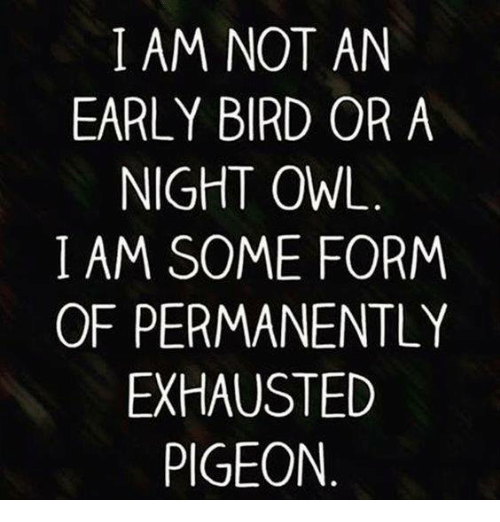
Thing the second: I still write better at night.  I’ve tried for a long time to adjust to writing in the late afternoon/early evening with mixed results.  Sometimes, words flow easily and I finish my 1,000 words before I even realize it.  A lot of times, writing the words is like pulling teeth.  But, I’ve found that when I open a story around 11ish at night to write my words on those days I’m too lazy to do it in the afternoon, the words always flow.  Granted, I’m usually only aiming for 100-150 at that point, so it might just be that I’m not pressuring myself with a difficult goal.  It’s just something I noticed.  But I’ve always been a night owl, so this is no surprise.

i-am-not-an-early-bird-or-a-night-owl-4729985
Pretty much.

Thing the last: writing every day is not a stress reliever for me.  A lot of people I know say that they feel so much better after they write their words for the day.  It’s like a catharsis for them to get words on the page (even if it’s just 50 words).  I am not one of these people.  I usually feel the same or worse after I write, unless I hit one of those rare days where the words tumble out onto the page almost by themselves.  Most of the time, I’m just happy that I can play games or read or watch anime or whatever without feeling guilty.  At least until I realize that it’s too late to do any of that stuff, then I’m just annoyed that I don’t have a day off to do any of it.

orig
When you finish writing and realize you don’t have time for anime.

In other words, my experiment with writing every day is going well.  I’m about halfway through the last chapter of my current novel attempt (hoping to finish by the end of the week).  When I switch to revision mode, I’m not sure if I’ll keep up with writing every single day, but I’m glad I’ve done it.  I admit that setting low goals for each day is a helpful way of getting back into the sway of writing.  Do you have any experience with something like this?  As always, feel free to share your thoughts and comments here or on my social media pages!